Highlights: Street interviews around harassment of peaceful panhandlers (Becky Johnson discusses Officer Garner’s new “begging near a freeway” interpetation of a city code)…How corporate is the new Trader Joe’s downtown?….Highlights and Lowlifes at Human Rights Hypocrisy Day in front of the courthouse with Mayor Rotkin on December 12…Street interviews including more CSO Pam Bachtel harassment downtown…More Human Rights Hypocrisy Day with Pat Clark, Mike Rotkin…Barbara of Clear View Court gives a caustic update on the destruction of rent control there…Richard Quigley discusses lying CHP officers in his helmet case as well as the banning of Jerry Henry from the Aptos Rancho Del Mar Shopping Center ($25,000 bail and a stay-away for offending the Coffee Roasting Co. manager).
The show broadcasts at 9:30 AM Sunday February 21, 2016 101.3 FM, streams on the internet at freakradio.org. It will archive at http://www.radiolibre.org/brb/brb160214.mp3.
It can also be found at http://radiolibre.org/brb/brb041212.mp3 .
Author Archives: huffsantacruz
Seattle to Open a Third Encampment, Several Safe Parking Zones while Santa Cruz Tightens RV Restrictions, Homeless Crackdown
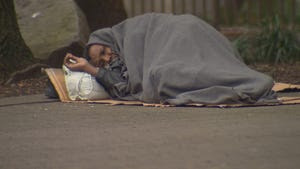
NORSE’S NOTES: In Seattle, WA, authorities are taking some steps to provide the beginnings of emergency shelter/housing options for those outside–those with vehicles and those without. In Santa Cruz, police continue to harass homeless with no shelter (See “Santa Cruz Police Target Homeless Sleepers Downtown” at https://www.indybay.org/
http://www.king5.com/story/
http://www.king5.com/story/


To view video, documents, and comments, go to
http://www.king5.com/story/
http://www.king5.com/story/
South Seattle could get city’s third homeless encampment
A proposal could mean tents and tiny houses go up in the 7500 block of Renton Avenue South, just off MLK, south of the Othello Light Rail station.
Josh Green, KING 5 News 7:37 p.m. PST February 15, 2016
CONNECTTWEET 1 LINKEDIN 6 COMMENTEMAILMORE
SEATTLE – South Seattle could soon be the site of another homeless encampment.
The Low Income Housing Institute is proposing putting a temporary tent encampment called Othello Village at 7544 MLK Jr. Way S.
In a letter to neighborhood residents, Executive Director Sharon Lee said the long-term plan is to develop a new home for a food bank and to build 100 affordable apartments on that property and the adjacent property, 7529 Renton Avenue S.
There’s a one-story apartment building and a commercial building on the MLK Way property. The Renton Avenue location is currently vacant.
“As with any new development, it takes two to three years to design, finance and construct a new building,” Lee wrote. “In the interim period, for one or two years, we are proposing to put in place a temporary tent encampment.”
Last year, Seattle Mayor Ed Murray and the city council approved a new ordinance that allows for three temporary tent encampments in the city on public or private land. There are already two — one in Ballard at 2826 NW Market Street and another in Interbay at 32334 17th Avenue W.
KING5
City leaders under pressure to solve homeless crisis
Lee said the city will help pay for operating costs including tents, a fence for the space, portable toilets, electricity, water, and trash removal.
“Day to day operations are the responsibility of the residents,” she said. “There are strict rules of conduct for residents including no alcohol, no drugs, and no violence.”
A maximum of 100 people will live there, Lee said.
There is a community meeting Tuesday at 7:00 p.m. at the New Holly Gathering Hall, 7054 32nd Avenue S.
The non-profit Low Income Housing Institute owns and operates more than 1,800 apartments in the region. LIHI will operate the encampment along with Nickelsville, which is also involved in the other camps across the city.
South Seattle could get city’s third homeless encampment. KING
Seattle mayor issues emergency order for 2 RV ‘safe lots’
Seattle’s mayor makes a major move to create more room for the homeless. Monday afternoon he issued an executive order to create two new safe parking lots for people living in their car or recreational vehicle.
Jake Whittenberg and Chris Daniels, KING 5 News 7:49 p.m. PST January 19, 2016
SEATTLE — Mayor Ed Murray issued an emergency order Tuesday to expedite the creation of two safe lots for homeless people who live in RVs or cars. The lots will be located at Ballard’s old Yankee Diner and in Delridge at West Marginal Way and Highland Park Way SW.
The two lots are expected to open in 30 days and will each have an estimate 50-vehicle capacity. Both sites will have sanitation and garbage service, and residents will be expected to follow a code of conduct that prohibits violence and the use of drugs.
Murray said that while the permanent locations are set up, three temporary street parking locations will be set up in Ballard, Interbay and SoDo.
Seattle Public Utilities owns the Ballard location at Shilshole Avenue NW and 24th Avenue NW. Seattle Department of Transportation is negotiating with the state DOT to buy the Delridge location.
Earlier Tuesday, councilmember Sally Bagshaw said talks were underway with land owners to host a possible site.
In a letter to community leaders in the Magnolia neighborhood, Bagshaw told residents meetings are underway with Mayor Ed Murray to determine how to address the RV issue which has prompted several complaints about trash and drug use.
“I still think they are going to keep coming in droves we’re not going to have a big enough park,” said Doug Kruger, owner of Kruger & Sons Marine Propeller in the Interbay neighborhood. Kruger says he’s had issues with theft, and heroin needles left in the street.
At a recent community meeting Seattle police estimated between 175-200 vehicles in the city have someone living inside.
This comes as the mayor declared a state of emergency to fight homelessness and the city is set to spend $50 million this year on the problem.
The mayor will send the emergency order to the city council for approval.
In an effort to get homeless living in RVs off the street, the city of Seattle is trying to find a place for them to park.
First ‘safe lot’ for homeless living in vehicles opens
On Friday, several recreational vehicles began arriving at two homeless camps in Seattle.
Dan Cassuto, KING 5 News 5:52 p.m. PST February 19, 2016
SEATTLE — A new safe parking lot opened in Ballard Friday for people living out of their RVs. The lot is located outside the former Yankee Diner.
The city paid to tow three RVs from a temporary lot a few blocks away and plans to move 20 to 25 vehicles over the next couple weeks.
“It was a blessing,” said Wanda Williams, who was the first homeless person to move into the parking lot with her Winnebago. “I cried. I have a home for once.”
The city provides 24/7 security, access to limited electricity, bathrooms, hand-washing stations and even a coffeemaker.
A detailed code of conduct was released Friday by the mayor’s office, outlining a long list of requirements and rules for homeless families living in the lot.
The rules include:
- No drugs or alcohol
- No dumping trash
- No open flames
Residents must also work with a case worker who will monitor their status in the parking lot and help them secure housing outside of the site.
Related stories:
Mayor issues emergency order for RV ‘safe lots’
South Seattle could get third homeless encampment
Seattle’s homeless crisis: How did we get here
CONNECTTWEETLINKEDIN 3 COMMENTEMAIL
Flashback Fourteen Years Today’s Bathrobespierre’s Broadsides Show Will Look Back on Feb 14, 2002 6 PM Free Radio Today
Flashing back again to February 14, 2002 In-studio interview with “Dangerous” John Thielking on the Mumia Abu Jamal struggle; phone interview with former chief Santa Barbara Public Defender and Homeless Champion Glenn Mowrer; the Supervisor’s Marijuana War–Interview with former owner of the Compassion Flower Inn Andrea Tishler:; Aftermath of the Privatization of Hippie Planter in front of New Leaf Market, Jenny Jett of Isla Vista Encampment, and more…
The show broadcasts at 101.3 FM, streams on the internet at freakradio.org. It will archive at http://www.radiolibre.org/brb/
18th Annual Homelessness Marathon Wednesday Night and Thursday Morning
COMING UP ON WEDNESDAY THE 17TH, THE NATIONAL ANNUAL HOMELESSNESS MARATHON, this year broadcasting from Washington, D.C. near the White House. Free Radio Santa Cruz will be broadcasting the 14 hour Marathon from 4 PM PST 2-17 to 6 AM PST 2-18 at 101.3 FM. The show will also stream at www.freakradio.org . For subsequent archiving, browse fpr 17th Annual Homelessness Marathon. Note that Hour 7 (between 10 PM and 11 PM PST) will have a shout-out from local Freedom Sleeper Toby Nixon, who will be at Freedom Sleepout #32 the night before.
18TH ANNUAL HOMELESSNESS MARATHON — BROADCAST SCHEDULE
The Homelessness Marathon is primarily composed of short, pre-recorded reports and longer live discussions.
ALL TIMES ARE EASTERN STANDARD TIME. FOR CALIFORNIA TIMES, SUBTRACT 3 HOURS. THE MARATHON RUNS FROM WEDNESDAY 4 PM PST 2-17 TO THURSDAY 6 AM 2-18
| HOUR 1
7-8 p.m. |
We’ll open with Brian Carome, director, and Robert Warren, vendor, from Street Sense, the homeless paper of D.C. We’ll initiate the first ever “Homeless Primary” by asking homeless people who they support for president, and then, joined by homeless advocate Eric Sheptock, we’ll begin a Homeless Walk Around the White House talking with homeless people there. | |
| HOUR 2
8-9 p.m. |
Short |
The Doug Seegers Story – reported by Tasha Lemly |
| Long | There’s No “I” in” Team” and No “You” In Public Housing” Guest host: Parisa Norouzi of Empower DC. | |
| HOUR 3
9-10 p.m. |
Short |
Street Poetry |
| Long | The Second Hour of our Homeless Walk Around the White House, plus, from Philadelphia, Cheri Honkala, Director of the Poor People’s Economic Human Rights Campaign. | |
| HOUR 4
10-11 p.m. |
Short |
Finding A Home In Alaska – reported by Ann Hillman |
| Long | You Don’t Have To Be Crazy To Be Homeless, But It Helps: A look at Mental Illness and Homelessness. plus a shout-out from Brad Lancaster in Shoreline, Washington, who has a homeless encampment in his back yard. Guest host: Chantal James, WPFW | |
| HOUR 5
11-Mid. |
Short |
Street Poetry |
| Long | If It Don’t Feel Good, Why’s It Illegal? – The Criminalization of Homelessness. Eric Tars, National Law Center on Homelessness and Poverty; Paul Boden, Western Regional Advocacy Project, Kristin Matthews, Washington Legal Clinic for the Homeless. Then: A talk with Red, a San Diego homeless man arrested for sleeping in a donated tiny house. Guest host: Otis Maclay. | |
| HOUR 6
Mid. – 1 a.m. |
Short |
Squatters in Venezuela – produced by Making Contact |
| Long | The third hour ofour Homeless Walk Around the White House | |
| HOUR 7
1–2 a.m. |
Short | Street Poetry |
| Long |
Guests: JoJo Valdez, who was swept from her homeless encampment in Boise, Idaho and Jessica McCafferty of the ACLU; then a shout-out from Toby Nixon, a homeless man protesting for homeless rights in Santa Cruz. Guest host: Otis Maclay, Pacifica Radio. |
|
| HOUR 8
2-3 a.m. |
Short |
Profiles – Perry, Olive Oil and Junior |
| Long | The fourth hour of our Homeless Walk Around the White House plus a shout-out from Abbotsford, Canada, where they dumped chicken manure on a homeless encampment. | |
| HOUR 9
3-4 a.m. |
Short | Street Poetry |
| Long | What Becomes of Homeless Youth? plus, Nick Dicenzo, who heads Cannabis Can, a charity that distributes marijuana to homeless people in Denver, Colorado. Guest host: Katea Stitt, WPFW. | |
| HOUR 10
4-5 a.m. |
Short |
Working Homeless – reported by Anne Hillman |
| Long | The fifth hour of our Homeless Walk Around the White House, plus a shout-out from Faygo, a homeless protester for homeless rights in Sacramento, California. | |
| HOUR 11
5-6 a.m. |
Short | Street Poetry |
| Long | Formerly homeless street musician Doug Seegers, from Sweden, and low-cost housing developer Sean Canonie, from Florida. Guest host: Katea Stitt, program director, WPFW. | |
| HOUR 12
6-7 a.m. |
Short |
Profile: Harley |
| Long |
The sixth hour of hour Homeless Walk Around the White House, plus a shout-out from Jared Stewart who, when we last spoke with him, had just been rousted from his homeless camp in New Orleans and was living under a bridge while awaiting back surgery. |
|
| HOUR 13
7-8 a.m. |
Short |
Street Poetry |
| Long |
Is Anyone Anywhere Solving Homelessness? We’ll take a look at some of the models being tried.Guest host: Joni Eisenberg, WPFW. |
|
| Hour 14
8-9 a.m. |
Short |
Homeless in Cape Cod – reported by Lucy Kang |
| Long | The Homeless Walk Around the White House will come to an end at the White House, where housed and homeless people will gather, we’ll announce the results of the “Homeless Primary,” and everyone will sing the Star Spangled Banner. | |
February FightBack Continues: Freedom SleepOut #32 Tuesday 2-16
TO COMMENT AND VIEW FUTURE DEVELOPMENTS, GO TO: https://www.indybay.org/
| Title: | The 32nd Time: Freedom Sleeper Activists Hit City Hall Sidewalk |
| START DATE: | Tuesday February 16 |
| TIME: | 5:00 PM – 5:00 AM |
| Location Details: | |
| Near the sacred grounds of City Hall at 809 Center St., in the courtyard until driven out at 10 PM by the anti-homeless “no public access at night” law in “progressive” Santa Cruz. | |
| Event Type: | Protest |
| Contact Name | Toby Nixon |
| Email Address | tobynixon [at] gms.com |
| Phone Number | 408-582-4152 |
| Address | |
| NUMBER THIRTY-TWO Santa Cruz’s homeless population still faces tickets and stay-away orders from parks at night, harassment in public spaces and buildings during the day, and the Sleeping Ban everywhere in the City after 11 PM. In solidarity with hundreds who have no shelter, Freedom Sleepers will gather at 5 PM and through the night for the 32nd Tuesday night weekly sleep-out. Last week’s Freedom SleepOut (#31) reportedly included 20 folks throughout the night. MEDIA BEGINS ON MAYOR LANE’S SLEEPING BAN REFORM Silver-tongued Steve Pleich has written an article for the on-line Street Spirit newspaper (soon to be available in hard copy in Santa Cruz at the Sub Rosa Cafe): http://www.thestreetspirit. Lobbying the Sleep-toxic City Council continues from the more rarified regions of closed liberal and religious groups. LOBBYING COMING UP The danger here–as with past such limited efforts–is that once Council nixes Lane’s reform, “respectable” liberals will simply stay home or rely on loudly-touted but never-completed legal action when what’s needed is intensified and focused protests. OTHER AVENUES Former liberal governor Jerry Brown has reportedly also told a local establishment liberal that he may consider the creation of safe sleeping zones supported by the California Conservation Corp. DIRECT ACTION PROSPECTS STILL MORE Check out the great poster by Warming Center activist Brent Adams: http://www.facebook.com/ ATTACKS ON HOMELESS ELSEWHERE New Salinas law attacks Chinatown homeless encampment: http://www.facebook.com/photo. HUFF activist Robert Norse composed and posted this announcement with input from Pat Colby and Steve Pleich. |
|
Sunday’s Bathrobespierre’s Broadsides Show Will Look Back on December 2003 9:30 AM Free Radio Sunday 2-14-16
Another flashback edition of Bathrobespierre’s Broadsides. We’ll look in on outspoken activist Jhond Golder describing his jail experiences for raising uncomfortable issues with the City, youth advocate Jerry Henry fighting descrimination out at the Rancho del Mar Shopping Center (before it was a mega-Safeway), turn-of-the-millenium poetry from Berkeley songstress Julia Vinograd, and writer Becky Johnson confronting Sleeping Ban booster and homeless civil rights remover Mike Rotkin. The show broadcasts at 101.3 FM, streams on the internet at freakradio.org. It will archive at http://www.radiolibre.org/brb/brb160214.mp3.
Thursday’s Bathrobespierre’s Broadsides Show Will Feature “Camp Paradise” and “Mock-Nazi Salute” Flashbacks to 2002 6PM Today
Swooping back to the March 27, 2002 edition of Bathrobespierre’s Broadsides, we join then-homeless attorney Kris Frederickson and Camp Paradise boss Larry Templeton discussing the court fight in the aftermath of Camp Paradise, the homeless-run encampment along the San Lorenzo River near the Hiway 1 bridge. Also on the show: activists and attorneys Kate Wells and David Beauvais begin the 12-year fight to establish free speech at City Council in the “mock-Nazi salute” cases. Though the City, after spending several hundred thousand dollars, avoided damages, the precedent became established that “a violation of the rules does not mean a disruption of the meeting”.
The show broadcasts at 101.3 FM, streams on the internet at freakradio.org. It will archive at http://www.radiolibre.org/brb/
The show broadcasts at 101.3 FM, streams on the internet at freakradio.org. It will archive at http://www.radiolibre.org/brb/
Glint of Sanity From Homeless Harassers of the Santa Clara Valley Water District?
NOTES BY NORSE: San Jose Jungle Survivor and Santa Cruz Freedom Sleeper Robert Aguirre isn’t the only sensible voice in this latest snapshot report from the San Jose area Water Distrct Jaw-a-Thon. The obvious solution of providing trash pick-up services rather than destructive camp dismantling actions is hard for the NIMBY (Not-in-my-back-yard) mentality to grok. The even more obvious financial assessment that would likely show the economic futility and stupidity of these raids is hopefully on the horizon. This kind of assessment in cities regarding police and emergency services for “disappearing” the homeless, had led–on paper at least–to Smart Solutions, 220-220, Housing First!, and Downtown Accountability projects.
MORE COMMENTS AND LINKS AT http://www.mv-voice.com/news/
New take on creekside encampments
Water district to explore housing homeless, rather than rousting them
by Kevin Forestieri / Mountain View Voice

Trash left over after a encampment cleanup by the Santa Clara Valley Water District. Photo courtesy of the Santa Clara Valley Water district.

Santa Clara Valley Water District board members agreed to sign onto a county-wide effort to reduce homelessness in Santa Clara County, which could include housing homeless people on district-owned land.
The regional water district may seem like an unlikely ally in the effort to shore up housing for the roughly 6,500 homeless people in the county. But encampments and trash pile-ups along several creeks and waterways have posed a chronic health and safety problem that drains the water district’s resources, officials say.
Over the last four years, the water district has cranked up efforts to dismantle homeless camps along waterways through its cleanup program. In the 2015 fiscal year, water district staff collected 1,209 tons of trash from encampments, more than the last two years combined. Costs for cleanup over the last three years has totaled nearly $2.7 million, which has been funded by the district’s 2012 Measure B parcel tax.
The decision by board members to work with county officials and housing agencies like Destination: Home could mark a big change of pace for the district, which has been focused on tearing down creekside encampments rather than on providing homeless services. This has resulted in an adversarial relationship between district staff and the homeless people living on water district property.
At the Jan. 26 board meeting, Liz Bettencourt, president of one of the district’s three employee associations, said conditions along the creeks have “deteriorated at a crazy rampant rate,” and the threat of violence employees face when cleaning out homeless encampments is a big concern. Bettencourt urged the board to consider added safety measures for district staff, including bullet-proof vests and assistance from the county sheriff’s office, during clean-up operations.
Robert Aguirre, who is no longer homeless but who used to live in the infamous “Jungle” encampment in San Jose, said the water district has largely done a bad job working with the creekside homeless population. When district staff come in to clean out encampments, Aguirre said there’s no opportunity for the homeless to separate their belongings, and that one person had a backpack physically taken off by a district staff member and thrown into a trash compactor.
“If you continue harassing the people who are homeless, they are going to continue to harass you back,” Aguirre said, in response to Bettencourt’s comments.
Despite the feelings of animosity, Aguirre said homeless people are willing to work with water district staff to keep the area clean, provided they’re given the opportunity. The problem, he said, is that there’s no trash pickup service when you live on the creeks, and naturally the garbage and refuse is going to build up.
“If people didn’t pick up trash in your neighborhood, it would start to accumulate and it would start to become a health hazard as well,” Aguirre said.
The encampment cleanup policies also have flaws that keep county waterways covered in trash. Richard McMurtry, a member of the Santa Clara County Creek Coalition, showed the board photo after photo of heaps of trash left by district staff immediately following an encampment cleanup. That’s because the cleanup program is intended to dismantle encampments, and any trash more than 30 feet from tent sites is left on the ground, McMurtry wrote in a letter to the board.
And taking down encampments doesn’t prevent homeless people from taking up residence along the creeks either, McMurtry said. If anything, he said, homeless people are simply uprooted and pushed to a new location along the same creek.
“There are many homeless who, despite having their sites being dismantled 10 times in the past two years, are still living within 200 yards of their original campsite,” McMurtry wrote to the board.
Moria Merriweather, a resident near Coyote Creek, said taking down encampments doesn’t really work, and that the district should be focused on providing toilets, trash collection and other sanitary services. Taking these steps, she said, will help to avoid the bacterial outbreaks, disease and trash build-up that are all too predictable as people live along the creeks.
A housing solution
The board agreed last week to put together a committee and find out what the water district can do, working with county officials, to better provide homes and services for the homeless in Santa Clara County. The move comes after the Santa Clara County Board of Supervisors approved a resolution last month calling on local agencies to do their part and reduce homelessness in the county.
The water district does have authority to support housing initiatives, including the use of district-owned land for temporary or permanent housing for homeless people, according to board member Gary Kremen, who represents North County cities including Mountain View and Palo Alto. He said using the district’s resources to build housing will be a much more cost-effective solution to homelessness along the county’s waterways.
“We need to house these people. That’s the best return on investment,” Kremen said.
Board member Tony Estremera agreed that a committee could give water district officials a good idea of what options are on the table for helping to reduce homelessness, and that it’s time for the water district to acknowledge that the high cost of living is forcing people to live along county creeks.
“I know in the past that our attitude has been, ‘We don’t want to attract folks (and) we don’t want to make it easy to camp,'” Estremera said. “However, we don’t have a choice about this economy, so we need to take a look at that.”
9:30 AM Sunday 2-7: Flashback Shows from April 1999 on Free Radio Santa Cruz: the Rotkin-Silva Sleeping Ban Debate
Tomorrow at 9:30 AM at 101.3 FM, streaming at freakradio.org, and archiving at http://www.radiolibre.org/brb/
The April 8, 1999 show featured a strong debate between former Mayor Mike Rotkin and homeless activist David Silva on the killing the Sleeping Ban. The next show on April 11, 1999 had Santa Barbara Homeless Coalition writer and organizer Jane Haagstrom discussing the preiously successful Santa Barbara struggle, Edward de Bolt on police mistreatment, Silva sparring with host Norse, the Biotic Backing Brigade’s pie-ing of Mayor Willie Brown, and David Silva reviewing his Rotkin debate.
Call-in with comments at 423-4833 which will be mentioned in later broadcasts.
Sacramento Update: Same Crap about “Camping”
NOTE BY NORSE: Tip of the Hat to Linda Lemaster for posting this Sacramento update on the Freedom Sleepers Facebook page. Word I got was that Freedom SleepOut #30 continued its small persistent presence on February 2nd in front of City Hall. Has the formerly 24-hour bathroom at the Soquel St.garage across from New Leaf Market in Santa Cruz been reopened in the wee hours as it was intended to be? A sympathetic worker said that shelter insufficiency has resulted in folks holding up in the bathrooms at night for protection and privacy–the right reason to establish safe camping zones, sanctuary villages, affordable housing, cheap SRO’s, etc. but not to shut down bathrooms. Obviously. Still no apparently public word from former Mayor Don Lane’s “let’s end the embarrassment and remove sleeping from the camping ordinance, but keep it illegal to fall asleep in any park at night and continue the hostile stay-away orders that I voted for 2 years ago”. I have been down for the count for awhile, but I haven’t heard anything new brewing.
Leave comments about the below story at https://www.newsreview.com/
Debunking five myths about Sacramento’s latest homelessness debate
Our shelters do not have enough beds for everyone, and other necessary facts.
By Raheem F. Hosseini
raheemh@newsreview.com

The homeless protest inched closer to City Hall’s front entrance this past Friday.
PHOTO BY MICHAEL MILLER
|
|
Advertisement
|

With tensions frothing between Sacramento city officials and the local Right to Rest protest movement, SN&R decided to tackle some of the most common—and insulting—misconceptions about the current debate.
Myth No. 1: This is about camping.
We remember camping: Mom smearing us with mosquito repellant, dad wrestling with tent poles—the city of Sacramento’s “unlawful camping” ordinance has nothing to do with that.
“This makes it against the law to live outdoors,” explains Paula Lomazzi, a former homeless woman who runs the Sacramento Homeless Organizing Committee. “And when there’s not [another] option for everyone, that’s like saying you can’t exist.”
As written, city code 12.52.030 prohibits camping on any public or private property—so, everywhere—unless it’s for temporary recreation or events. In other words, it’s OK to sleep outside unless that’s your only choice.
And if it is, be prepared to pay a $1,000 fine and spend six months in jail, because the city has couched its ordinance under the state’s public nuisance law. Violating it is a misdemeanor, which means a criminal record, though most violations are reduced to infractions.
“Making it a crime to live outside doesn’t keep anyone from living outside,” says Niki Jones of Wind Youth Services, the area’s only service-provider for young people experiencing homelessness. “It just makes it harder to change your situation.”
Myth No. 2: There’s enough shelter to go around.
Not even close, says Joan Burke, Sacramento Loaves & Fishes’ advocacy director. “The most important fact about the emergency shelter system in Sacramento is that the shelters do not have enough beds for everyone seeking shelter and routinely turn away people for lack of space,” she says by email.
All totaled, there are 1,033 slots scattered across more than two-dozen shelter or motel programs in Sacramento County, “each with its own intake procedures and target populations,” Burke says. “The process of getting into a shelter is anything but user friendly or efficient.”
By the city’s own low-ball estimate, 2,659 people experience homelessness on any given night in Sacramento County. (There are actually way more, but we’ll get to that later.) That right there shows there aren’t nearly enough beds to go around.
A Loaves & Fishes survey of 336 guests who arrived for lunch one day revealed that 63 percent of them had slept outside the previous night. The wait-list for Wind’s 12-bed shelter, meanwhile, includes more than 100 people, says development director Sarah Mullins.
The city likes to wave a 5 percent vacancy rate to prove that there’s still room at the shelters, but that’s fuzzy math of the most disingenuous order. Burke says people sometimes don’t show up at the last minute for reservations. Then there are the homeless people with mental and developmental disabilities, physical ailments or substance addictions (it’s often a cocktail) who Burke says simply can’t function in a communal shelter setting. There are few, if any, crisis-placement options for them.
“This handful of unfilled beds is what permits the powers that be to proclaim that our shelters have vacancies,” she says.
Myth No. 3: There are “only” 2,659 homeless people in Sacramento.
That number comes from a biennial tally called the point-in-time, or PIT, survey, and is accepted as the standard when it comes to quantifying how many people experience homelessness on any given night in Sacramento County.
It’s also a massive understatement, say homeless-service providers.
First off, PIT surveys occur every two years on a single winter night when homeless residents are even less likely to dwell in heavily trafficked areas due to the weather. They don’t account for anyone who’s couch-surfing, staying in a motel or sleeping in a car. These massive undertakings are also undercut by planning shortcomings and inadequate training, say two service providers who participated in them.
“It was really sloppily done,” says one.
Yet the city swears by these figures, saying on its website that the PIT survey “is the community’s best way to estimate the number of people experiencing homelessness, including those in certain subpopulations, such as transition-age youth.”
Worse, we in the media often repeat the PIT figures without qualification, as if they accurately reflect the scope of our housing problem. They don’t.
To put it in perspective, the 2015 PIT count found 291 homeless youth under the age of 24. But the Wind drop-in center for homeless youth served 918 different individuals from this age group last year. “Youth experiencing homelessness are grossly under reported,” Mullins says.
Get ready to have your mind blown. According to an analysis of federal enrollment data—which does include couch-surfing and sleeping in cars or motels—the California Homeless Youth Project determined that nearly 12,000 local school children lacked permanent housing during the 2012-13 school year. And that’s just kids.
Reconnecting this to the camping issue was PS7 elementary school teacher Erica Talbott, who put the matter in stark relief at a recent city council meeting. “I find it absolutely tragic that the students in my classroom … are unable to learn during the day because they are unable to sleep at night, all due to the camping ordinance that’s in place. Because of this law, my 8-year-olds are criminals,” she told council members. “I respectfully ask you where they are supposed to sleep tonight.”
The council didn’t have an answer. But it’s always been better at counting votes than counting constituents.
Myth No. 4: “Homeless protesters” are the only ones complaining.
Teachers and labor activists. Medical and nursing students. Religious leaders from Christian, Jewish and Islamic faiths. Members of the LGBTQ community and Black Lives Matter movement. And, yes, homeless residents and activists. This is the rapidly expanding coalition that is demanding the repeal of the city’s anti-camping law.
What a real fringe group.
Ever since the occupation outside of City Hall began December 8, 2015, officials have tried to diminish the Right to Rest movement as a small band of agitators who rebuff the city’s attempts to help. But officials are losing that PR battle.
While homeless protesters do make up a majority of those who have camped on City Hall’s front porch for two months now, the coalition goes beyond those without shelter. California Homeless Youth Project director Shahera Hyatt explains this has as much to do with common interests as it does compassion. “The privatization of public space affects us all. The militarization of our police affects us all,” she says. “It’s just that they’ve felt the effects first.”
As the Right to Rest coalition has expanded, its opposition has dwindled in size, if not power. At a recent city council meeting, special-education teacher Trina Allen pointed out the disparity in allies, with politicians, cops and connected business interests on one side, and everyone else on the other. Or, as she put it, “basically the people your policies, your police and your ideology currently and have historically subjugated.”
Myth No. 5: Repealing the anti-camping ordinance will increase public defecation.
Type “Sacramento homeless” into Yahoo’s search engine and the first thing to pop up, thankfully, is “Sacramento Homeless Organizing Committee.” But the second result is “Sacramento homeless defecate.”
Disappointingly, poop has become the central talking point for public officials clinging to their increasingly unpopular policy. At a press conference last month, both Councilman Steve Hansen and Deputy Police Chief Ken Bernard offered variations on this theme. Here’s Hansen: “We can’t allow people to camp in alleys, to urinate and defecate wherever they want.” And Bernard: “We want to solve this problem, but we can’t allow people to camp in alleys, camp on the side of houses, urinate and defecate wherever they want to.”
This confused us. Does having the legal right to sleep cause someone to lose control of their bowels?
No, it turns out.
“They have a demented urge to dehumanize people by painting them as one-dimensional barbarians,” says Omar Sahak, who belongs to a group of UC Davis medical and nursing students that’s joined the Right to Rest coalition. “They could rather think about how to meet basic human biological needs. There is a great prototype toilet already developed for the Tenderloin in S.F.”
Point taken.
Hansen and Bernard made what’s called a false equivalency. The city’s argument for keeping the camping ban is riddled with them. Other members of the council, including mayoral candidate Angelique Ashby, keep saying that repealing the ban would somehow mean that they’ve accepted homelessness as the city’s status quo.
Two points: (1) That ship has already sailed. Thank Oprah’s 2009 visit to Tent City. (2) Decriminalizing people’s ability to sleep outside doesn’t mean the city can’t still pursue the permanent housing solutions it’s outlined. In fact, it’ll have more resources to do so since it will spend less on citing, arresting, booking and jailing people for the crime of making us uncomfortable.
“We can work on solutions while honoring somebody’s human dignity and allowing them to sleep,” says Wind’s Jones. “People are going to be going to the bathroom either way. What’s going to affect that is whether there are accessible public restrooms, and there aren’t.”
Case in point: The city recently padlocked public restrooms in city parks and inside of City Hall. It justified the decision on its website by saying the restrooms were being used for illegal activities and had “become filthy.” But that’s misleading. According to a cost analysis document from the city, people were using the restrooms to sleep and bathe.
The camping law prevents public defecation the same way that the city’s public nudity ban erases genitalia: by pushing the crap out of sight.