Fresno Fires on the Homeless…Again

NOTES BY NORSE:   The kind of photographic and journalistic documentation of Santa Cruz’s calculated cruel crackdown on homeless camps is much  needed—-and we can learn much from Fresno–where homeless activists have pressed successful lawsuits, provided the trash and waste disposal that the city refuses to provide to existing homeless encampments, and publicized abuses so regularly that the City is forced to respond with the kind of caution (though not really care) that is entirely foreign to Santa Cruz sweeps.
Still no word from Councilmember Posner on the $15,000 bill for a lone portapotty being set up “as an experiment” near the San Lorenzo River at night (the only 24-hour shitter in town apparently).   As I continually insist, the money could be far more effectively spent on opening existing bathrooms in San Lorenzo Park and at the Soquel and Front St. parking structure.  What say you, Posner?
No word either from City Attorney Barisone on the right of artists to put sales tags (i.e. visible prices) on their work on Pacific Ave. even though the clear White vs. City of Sparks decision forced Barisone to allow Rightsfinder Robin to do just that several years ago. (For the decision go to www.huffsantacruz.org and look under “Recent Legal Decisions” on the main page.
HUFF meets tomorrow (9-4) at 10 AM at the Sub Rosa if folks wish to discuss and act on these issues.

The City of Fresno Declares War on the Poor

By Jessie Speer

The author, Jessie Speer (center), with Ray Polk (left) and Larry Collins (right) at the H street homeless encampment, which the City of Fresno plans to bulldoze on Sept. 9.The author, Jessie Speer (center), with Ray Polk (left) and Larry Collins (right) at the H street homeless encampment, which the City of Fresno plans to bulldoze on Sept. 9.


Imagine a young woman. Close your eyes and see her in front of you—her hopeful gaze, her restless hands. Now imagine one morning she can’t get out of bed. The doctor says it’s brain chemistry, but her family can’t afford the treatment she needs.

There is no shelter space, so she ends up living in an encampment on the banks of a canal near downtown Fresno. One day the city announces it will bulldoze her tent, destroying everything she has.

This is not a nightmare. This is the real story of a young woman I met this summer while conducting interviews for a master’s thesis on Fresno homelessness with Syracuse University. Her name was Peaches, and she had freckles and curly hair. We sat outside her tent as she told me about her working-class upbringing, her bipolar disorder and her struggle with homelessness. (“Peaches” is a pseudonym, as the author protects the identity of all participants who wish to remain anonymous.)

Several weeks later, the city announced its plan to bulldoze three major tent cities in downtown Fresno. It will not provide residents with alternative shelter. When I asked Police Chief Jerry Dyer what will happen when the homeless resettle in other neighborhoods, he said the police will remove every camp in the city and continue doing so as long as necessary. I wondered what would happen to Peaches.

Fresno has the third highest rate of homelessness in the nation, and in 2011 it was the second most impoverished city. I came here to research how the local government was handling these high rates of homelessness and poverty. Over a two-month period, I interviewed more than two dozen politicians, shelter operators, community advocates and homeless people. I also attended community meetings and press conferences and read hundreds of pages of documents.

The more I learned, the more apparent it became that the city’s policy is to effectively drive the homeless out of Fresno. Politicians want to please business owners and see homelessness as a hindrance to downtown revitalization. Shelter operators claim that the homeless camps around their facilities have caused a decline in the use of services by other clients. In interviews, both groups consistently described all people without homes as criminal and deviant. The executive director of one of Fresno’s largest shelters told me that the homeless were “worse than infidels.”

I decided to write this article because I know firsthand that the homeless are not deviants. They are not separate and distinct from the rest of us. Like Peaches, the homeless are the mothers, fathers, grandmothers and cousins of the working poor in this community. Many homeless people work hard recycling or doing odd jobs all day long. Many people give away their last pair of clean socks to their neighbor or share their food with the community. And at no point during the hours I spent by myself at the camps did I feel threatened or unsafe.

At their latest press conference, city officials repeatedly referred to a recent string of violent crimes as the underlying reason behind the city’s new policy. Yet several insiders informed me that the plan to destroy the camps predated these crimes. And when I asked Chief Dyer how many of these violent crimes were committed by homeless people, he admitted only one perpetrator was homeless. Should more than 3,000 unsheltered citizens be driven out of the city because of the actions of one person?

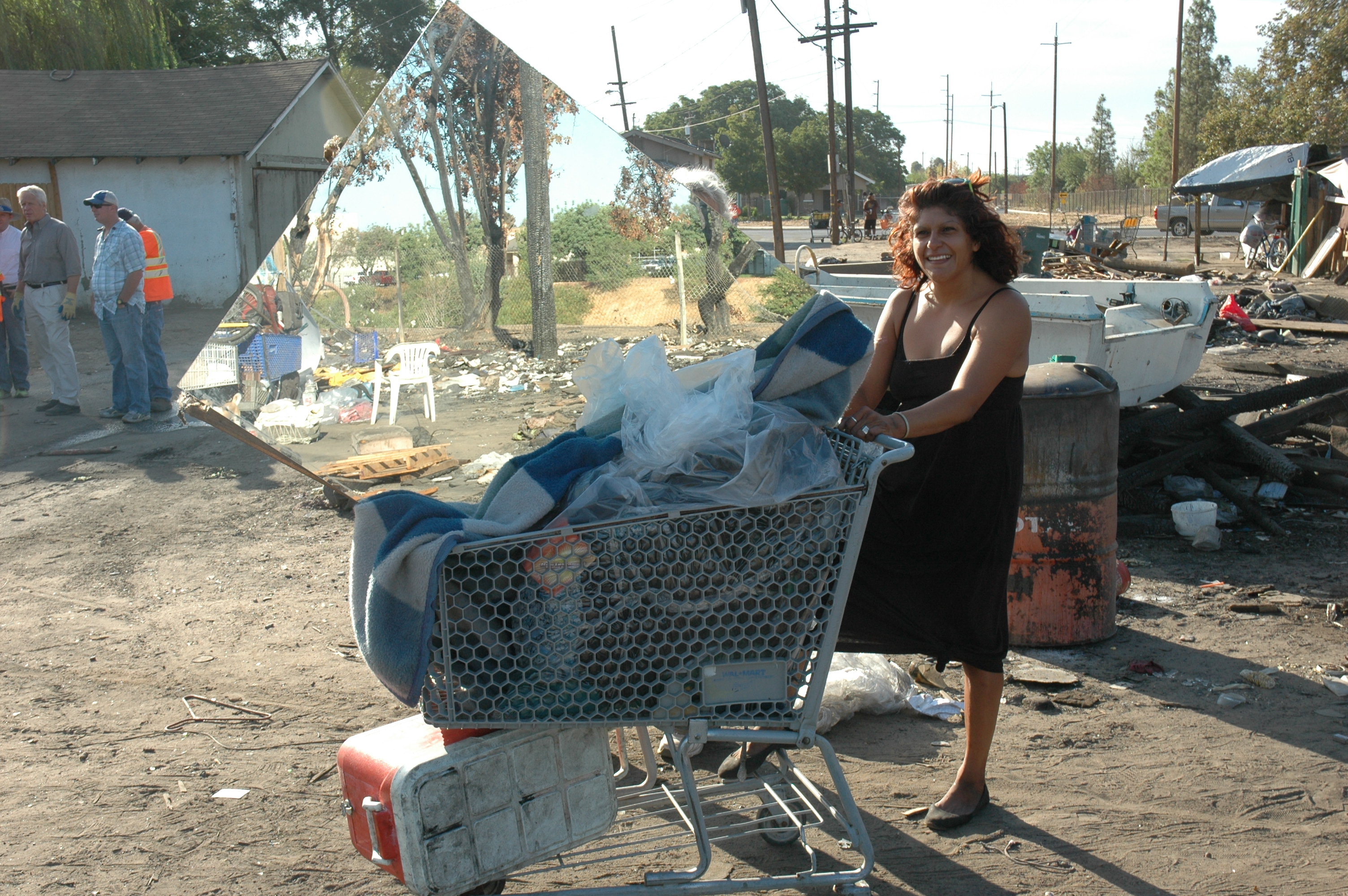
The City of Fresno destroyed Yellow Feather’s shelter and confiscated her property. She now sleeps on the sidewalk near the Poverello House.The City of Fresno destroyed Yellow Feather’s shelter and confiscated her property. She now sleeps on the sidewalk near the Poverello House.

Imagine a massive flood hits north Fresno and hundreds of middle-class homes are destroyed. Of those affected, some don’t have anywhere to stay and begin living in tents to survive. Would you expect the community to come forward and help them, or should the community destroy their tents and drive them out of the city? I’m sure most Fresno politicians wouldn’t hesitate to help middle-class families get back on their feet. We would never think to blame middle-class flood victims for their tragic circumstances. But a pervasive and historic ideology says that poor people are somehow less deserving of kindness.

Aristotle wrote that wealth is a prerequisite for goodness. Milton Friedman, one of the fathers of American neoliberalism, argued that the poor are the losers of the capitalist system. In this way, poverty becomes justified, and society is no longer responsible.

But these luminaries forget that one’s lot is usually the luck of the draw, not a personal achievement. You are born with money, or you are born without it. And when you are born without money, you cannot afford disaster. Being laid off, missing a rent check, being arrested, getting sick, losing a loved one, surviving violence, getting hooked on drugs—every person I talked with who is living on the streets suffered from one or more of these problems.

The middle class and the wealthy have problems too. The difference is that their families will step in to pay for rent, quality healthcare, rehab or a lawyer. But for those already struggling with poverty, any blow can easily lead to homelessness. And once someone is living on the streets, it becomes harder and harder to bounce back, as physical health declines, depression sets in and drugs become a means of escape and self-medication.

As a society, we have several choices. We can help each other, we can do nothing or we can chase our poorest citizens out of town. For years, Fresno chose the second option and did nothing to house the majority of its homeless population who lived in sprawling downtown encampments. But when these camps began to receive negative press, the city started a campaign of destruction.

Over the course of a two-year period beginning in 2005, the city bulldozed at least 50 camps. During the raids, bulldozers came at odd hours and crushed all structures. Several residents lost their animals. On one occasion, a man crawled out of his tent moments after an activist prevented it from being bulldozed.

On another occasion, a Fresno police officer pushed a woman’s shopping cart into an irrigation canal of rushing water. The woman lived on a breathing machine due to severe asthma and had to attempt to replace her identification, birth certificate and medical records in order to requalify for disability.

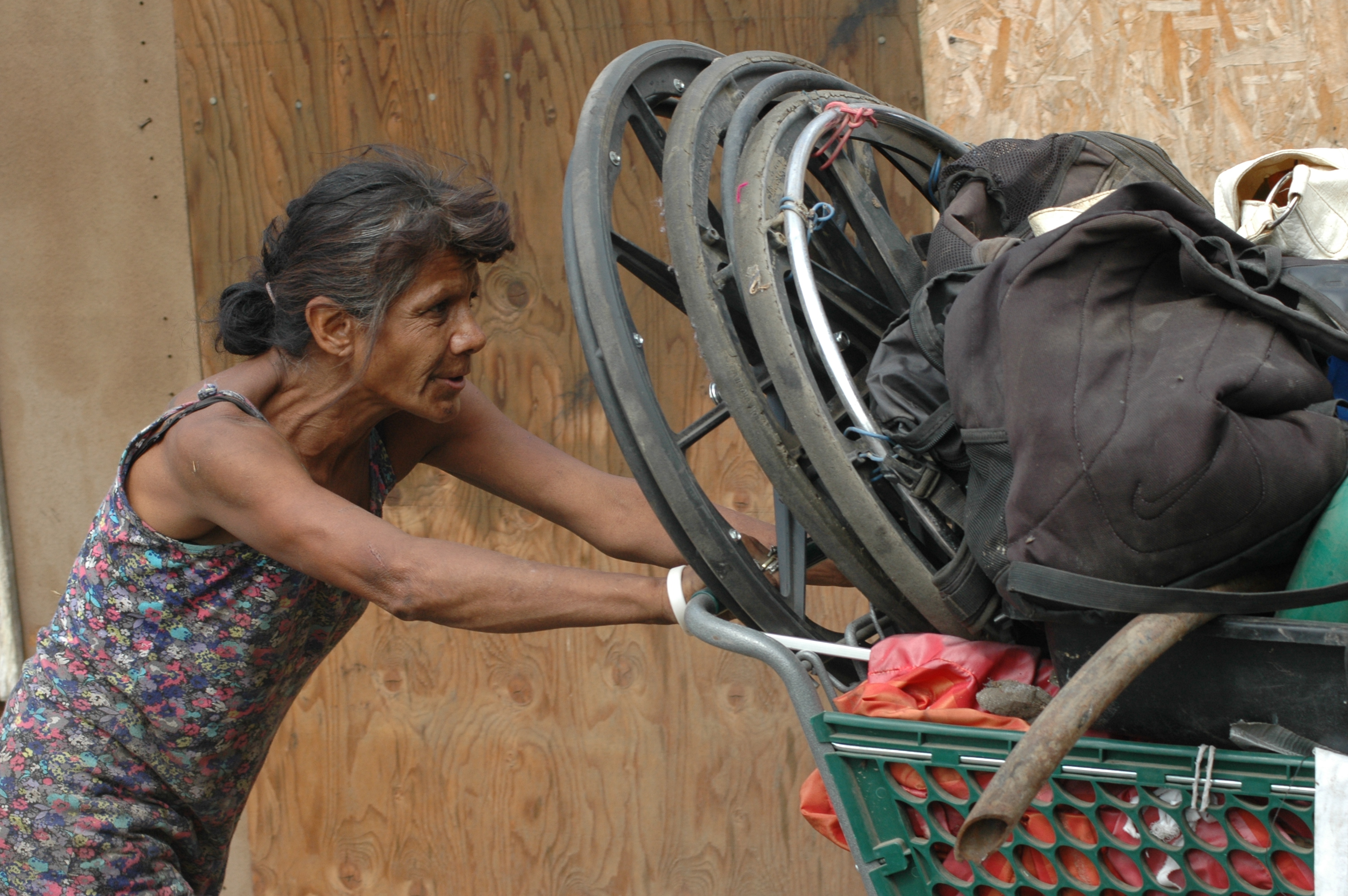
The city destroyed another woman’s wheelchair, which left her sleeping outdoors without shelter or blankets. As a result, she slipped into a coma for two weeks. When city officials tried to destroy her tent on a second occasion, police threatened to Taser her husband if he intervened. The city’s policies resulted in hundreds of similar tragedies—tragedies that happened to real people, not the vague apparition Fresno politicians tend to dismiss as “the criminal homeless.”

In the wake of a lawsuit filed against the city in 2006, the sweeps slowed and tent city residents enjoyed a temporary reprieve. But the sweeps happened again in 2011, and again civil rights lawyers filed suit. Fresno officials I spoke with unanimously claimed that the lawsuits prevented them from doing anything about homelessness, when in fact the lawsuits only prevented them from unconstitutionally destroying people’s property.

As a corollary to this brutal and expensive policy, any attempts to create shelter options for the homeless have been seriously flawed and underfunded. In 2006, only 2% of the city’s homeless population was sheltered, and no new temporary shelters have been constructed since then. Currently, one of Fresno’s only emergency shelters is operating at less than 10% capacity because its executive director ousted anyone who uses a cellphone, who doesn’t pray and repent to Jesus on a daily basis, or who has any source of income. As one homeless man told me, this shelter is “worse than prison.” And many Fresno shelters have similarly draconian rules.

Meanwhile, attempts at securing permanent housing for the homeless in Fresno have been plagued by corruption. In 2010, when the city received an $11 million federal grant for permanent housing for the homeless, the money was given to a private developer to construct a small housing facility. The chair of the board that allocated the money also happened to be the CEO of the company that constructed the building. This facility now stands as the exemplary model for future housing for the homeless.

Thus, homelessness has become an industry in which various developers, shelters and service providers vie for government money. These problems can and should be addressed. But the city is so focused on driving the homeless out of town that the time and resources needed to do so are sorely lacking.

During my time here, I faced the real, everyday humanity of the people who are living on the streets of Fresno, and I can no longer remain impartial to the city’s policies. The way Fresno handles homelessness is not only rooted in an inhumane ideology, it is also irrational. This city has tried this tactic before in 2005 and 2011, and in both instances it failed. Homelessness is still a persistent problem. It’s time for a new tactic.

*****

Jessie Speer is pursuing a master’s degree in geography at Syracuse University. Contact her at jlspeer@syr.edu.

Rev. Dr. Chris Breedlove of College Community Congregational spoke at the press conference organized by homeless advocatesRev. Dr. Chris Breedlove of College Community Congregational spoke at the press conference organized by homeless advocates

Coalition Organized in Opposition to Razing of Homeless Encampments

By Community Alliance Staff

About 30 members and supporters of the Fresno Coalition for Humane and Affordable Housing Policies held a press conference on Aug. 26 on the corner of Santa Clara and G streets to announce their opposition to the city’s planned demolition and to launch a petition drive asking the city to halt the razing of the camps and address the issue of homelessness in a humane and effective manner. The Coalition’s petition has been uploaded to a Web site created by the group at www.helpfresnoshomeless.org/.

“Our group believes that demolishing homeless encampments is inhumane,” said Coalition member Mary Ellen Carter at the press conference. “The city’s plan to offer alternative housing to the people who live in the encampments is woefully inadequate.

“Few people in the encampments will be able to receive housing vouchers before the scheduled demolitions. The city’s plan is not a long-term plan at all; its lack of compassion is disturbing, and it is a public shame to our city. We can do better than this.”

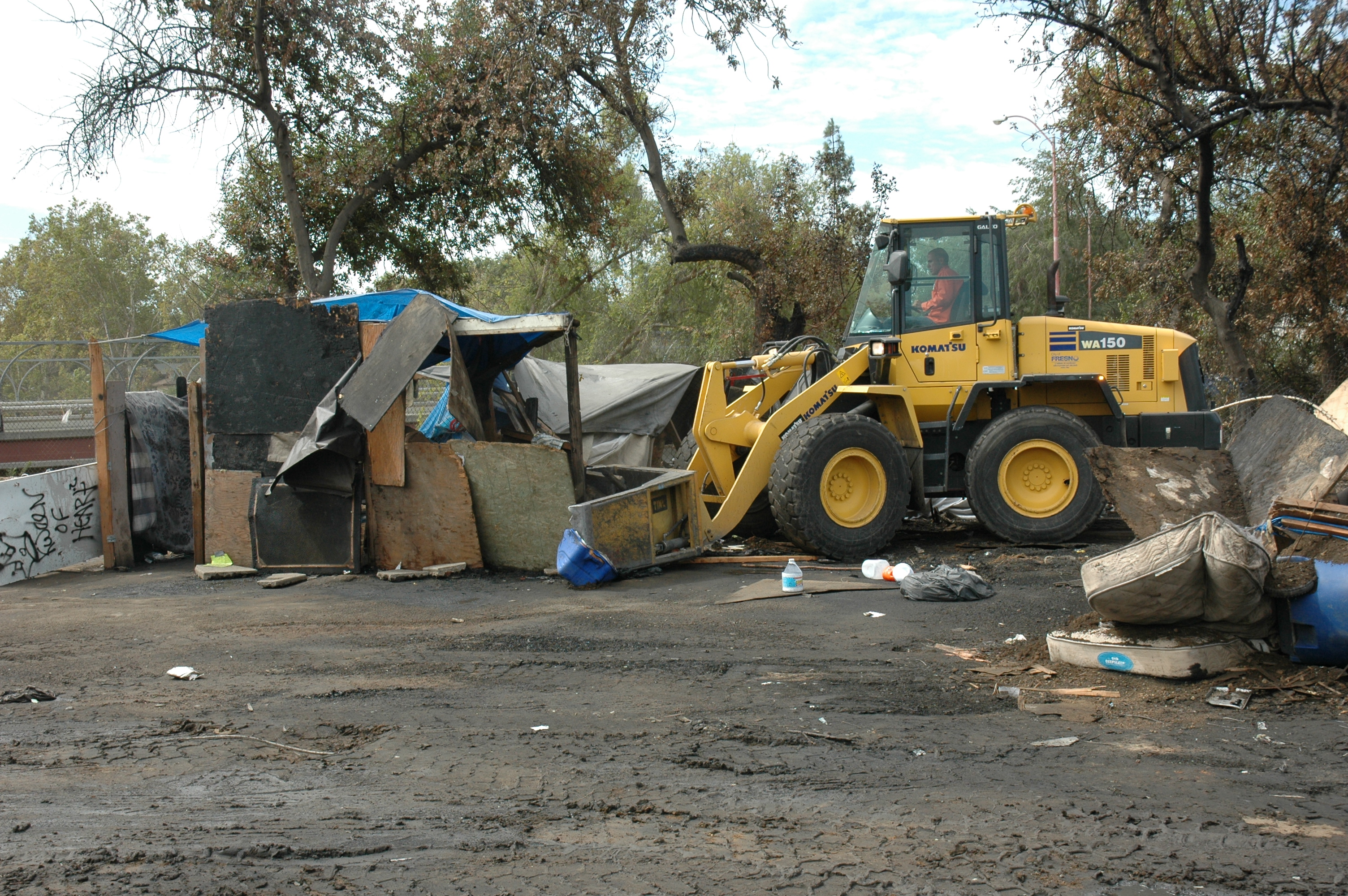
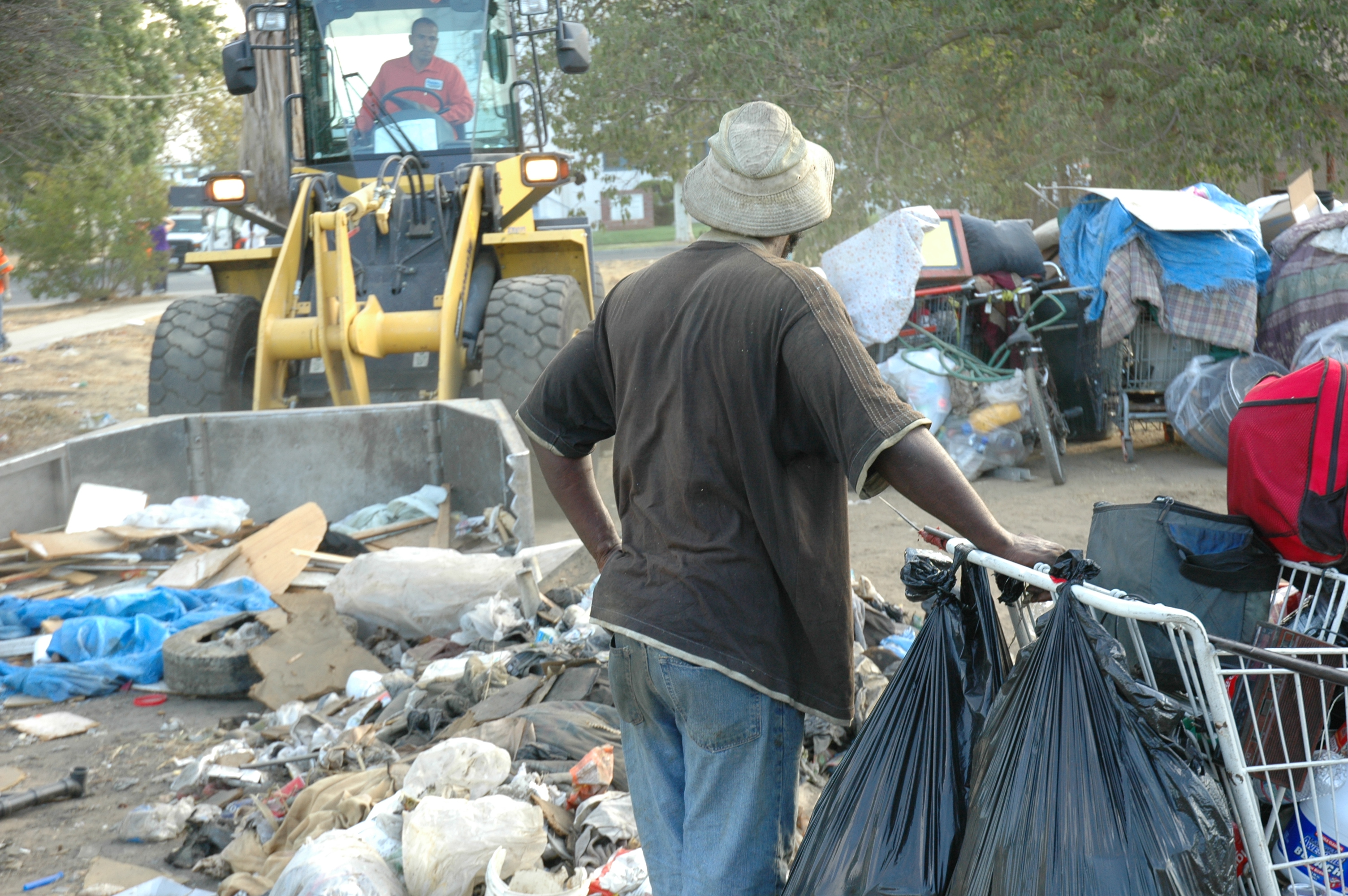
The city’s first day of the demolition went ahead as scheduled. Crews bagged and boxed homeless people’s property, taking it to a storage location where they say it will be available for retrieval for the next 90 days. Then the bulldozers moved in destroying couches, shelters and anything else left behind. Although the city workers store tents, they plowed through wooden shelters and put the remains into the back of waiting garbage trucks.

Later in the day, I talked to Yellow Feather a homeless woman who lived on F Street near Ventura, who was upset because the receipt she received for her property did not tell her where it was stored and it was issued by the Solid Waste department of the City of Fresno. Yellow Feather objected to her property being taken by Solid Waste, saying “my belongings are not garbage. And why can’t they tell me where my property is located at?”

A group of homeless men who attempted to get away from the demolition of their shelters were stopped on the other side of the street by Caltrans workers who told them they could not bring their shopping carts onto Caltrans land. In a minute, they were joined by a California Highway Patrol officer who provided additional urgency to the Caltrans workers’ demand to leave their vacant lot.

The homeless have no place to sleep that is safe and legal. Although city representatives are telling them that they will not stop them from sleeping on the sidewalk at night, some women like Yellow Feather wonder out loud how this new city policy is supposed to help them.
[FresnoHomelessAdvocates] Dispatch from the War Zone – Week Two

NOTES FROM NORSE:  Mike Rhodes, writer, activist, & photojournalist with the Community Alliance newspaper, the Fresno Homeless Advocates, & many other groups writes regularly at www.indybay.org/centralvalley where further comments on this story reprinted below can be posted.

In Santa Cruz, homeless people who had lived on private property with the permission of the owner reported their encampments and structures were destroyed and their  property was stolen by sheriff’s deputies and SCPD marauders in several seize-and-spoil operations in the last few weeks.  A marijuana crop was confiscated (or robbed, as homeless people saw it) even though they claimed at least ten of them had medical marijuana cards.

This happened both near highway 17 and another encampment some distance away.   I’ll be playing those reports Thursday September 8th on the stream of Free Radio during my show 6-8 PM at http://tunein.com/radio/FRSC-s47254/.

HUFF  will meet tomorrow at 10 AM at 703 Pacific to discuss this issue further.

From: MikeRhodes@comcast.net
Date: Tue, 3 Sep 2013 13:35:26 -0700
Subject: [FresnoHomelessAdvocates] Dispatch from the War Zone – Week Two

The City of Fresno is in their second week of destroying homeless encampments in the downtown area.  To see photos of the demolition and people trying to escape, go to:  

Mike Rhodes  Editor  Community Alliance Newspaper
PO Box 5077  Fresno Ca 93755  (559) 978-4502 (cell)
editor@fresnoalliance.comwww.fresnoalliance.com


https://www.indybay.org/newsitems/2013/09/03/18742623.php

Central Valley | Health, Housing, and Public Services

Dispatch from the War Zone – Week Two
by Mike Rhodes ( editor [at] fresnoalliance.com )
Tuesday Sep 3rd, 2013 1:28 PM

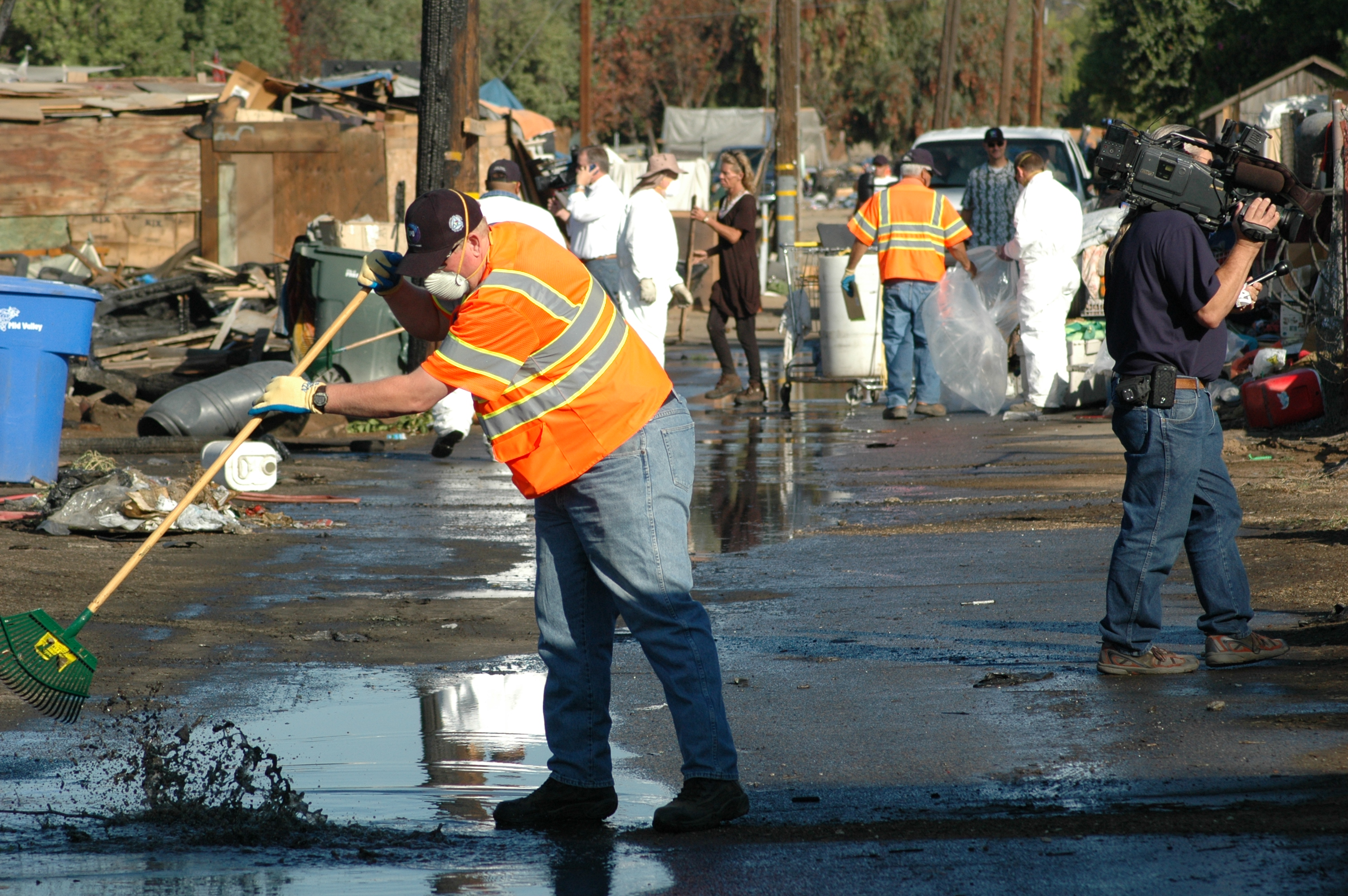
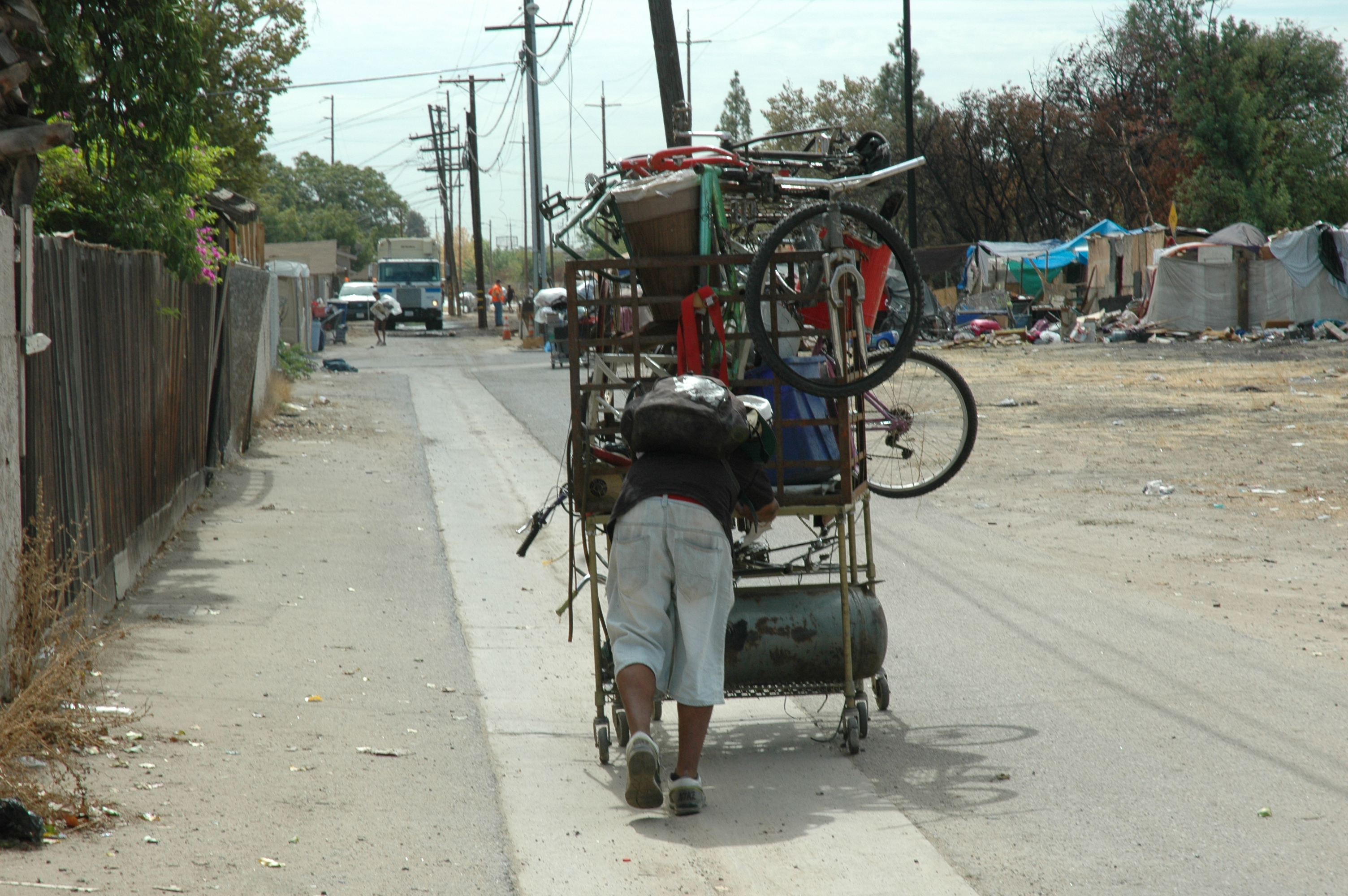
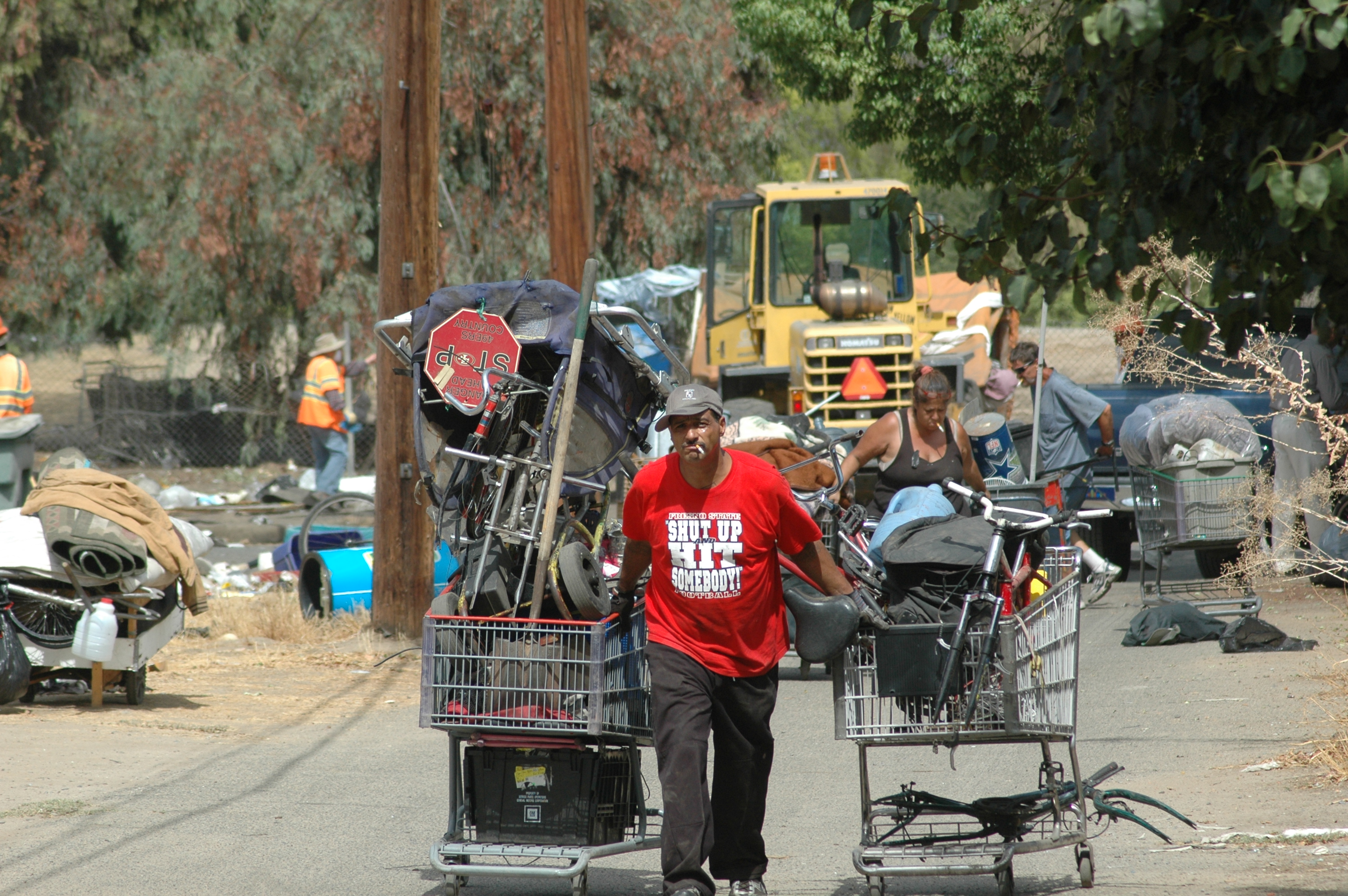
The City of Fresno is in their second week of destroying homeless encampments in the downtown area. The photos of the demolition and people trying to escape (below) are from the encampment that is located between E street and highway 99 with California Ave and San Benito on either end of the encampment. These photos were taken on Tuesday, September 3, 2013.

The city work crews gathered at 7 a.m. and were soon walking through the encampment telling the homeless residents that they have to move on. Most homeless people I talked to did not have anyplace to go. Several said they would go to the H street encampment that is scheduled to be destroyed (by the city) next week and some said they would sleep on a nearby sidewalk. As I arrived at about 6:30 a.m. some people were still sleeping on sidewalks by the Poverello House, the location of last weeks demolitions.

It was the Poverello House, which is a social service organization that provides meals for the homeless, that pushed the city to destroy the homeless encampments. They argued that the encampments, with their run down appearance and alleged crime was preventing clients from entering their facility.

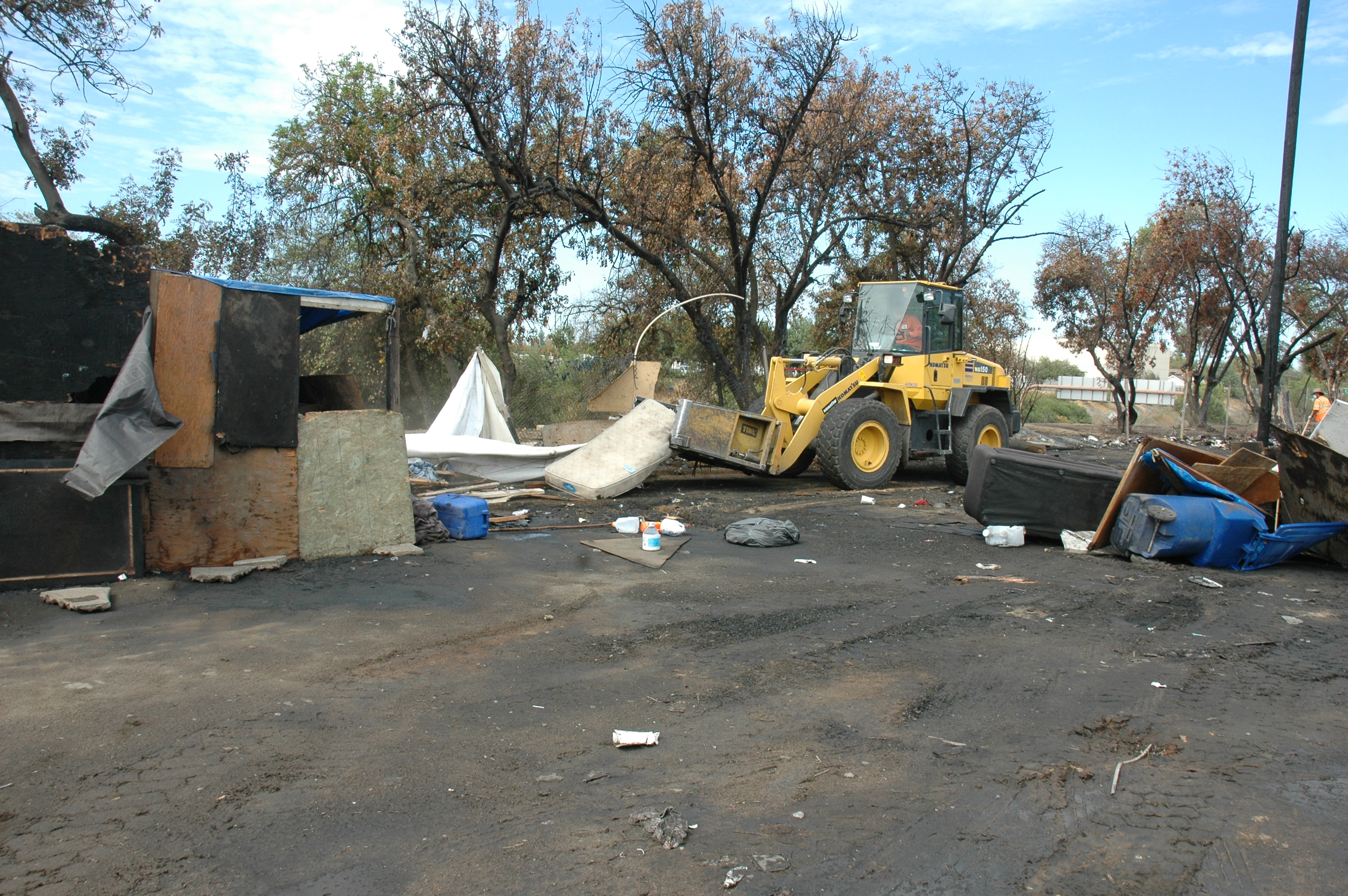
The demolition today followed a pattern that played out last week near the Poverello House. After the city’s attorney and sanitation workers walk through the encampment (with multiple video recorders capturing every conversation), they offer the residents bags to put their property in. If they have a lot of property, the city brings in a large 8 x 8 x 20 foot container. While property is being stored, the bulldozers start clearing out unwanted property and trash that has been left behind. Soon, the bulldozers are tearing into the shelters as many of the homeless are still pushing shopping carts away. Eventually every last shelter will be destroyed, property will be stored for 90 days, and the homeless will have no place safe to sleep tonight.

§The Bulldozers Come Very Close to Where People are Standing

by Mike Rhodes Tuesday Sep 3rd, 2013 1:28 PM

§Saving a Mirror

by Mike Rhodes Tuesday Sep 3rd, 2013 1:28 PM

§A Scene from the Demolition

by Mike Rhodes Tuesday Sep 3rd, 2013 1:28 PM

§Hauling away a Water Bottle

by Mike Rhodes Tuesday Sep 3rd, 2013 1:28 PM

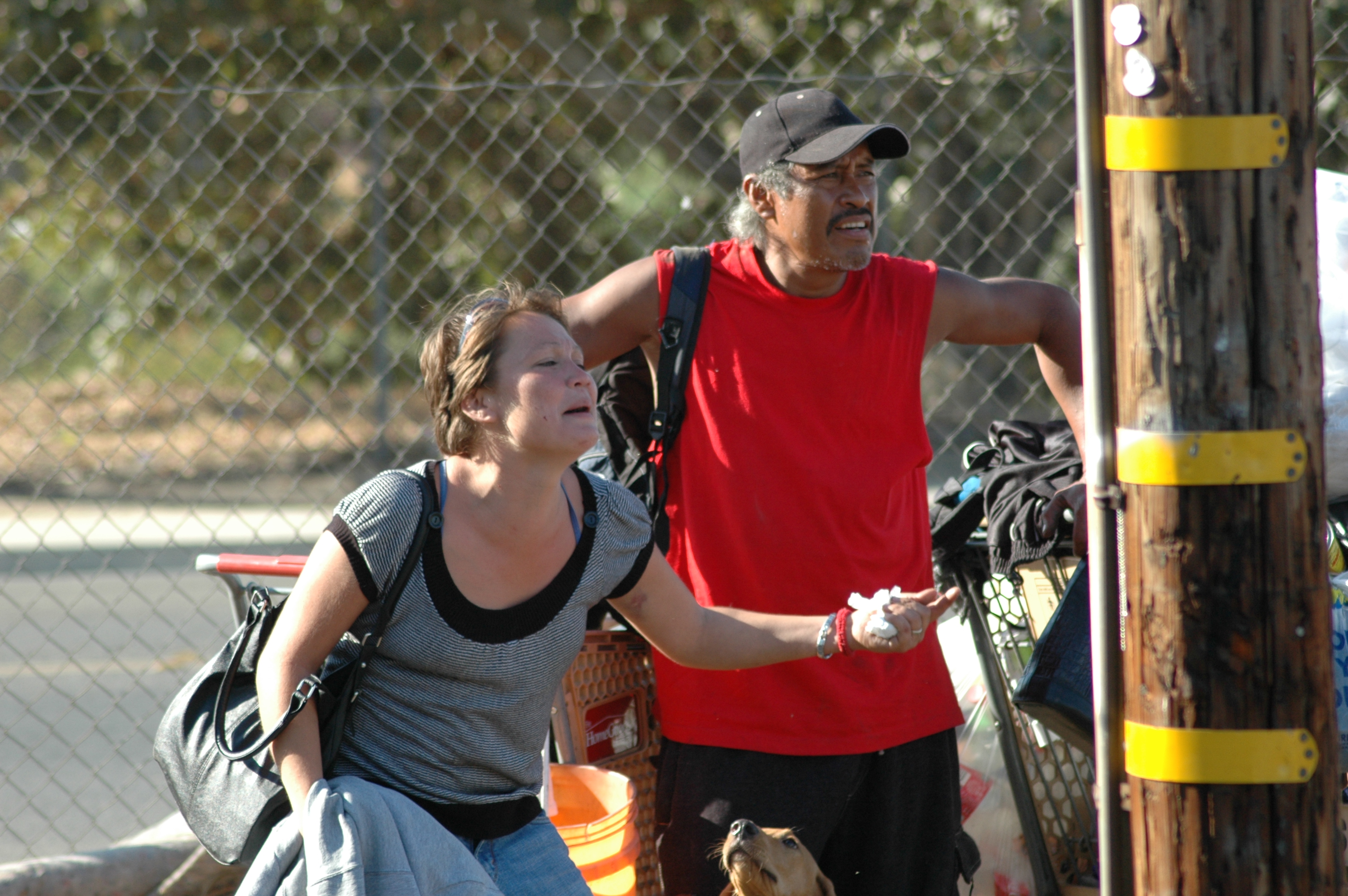
§This Woman Broke Down as the Demolition Began

by Mike Rhodes Tuesday Sep 3rd, 2013 1:28 PM

§One of the Last to Leave

by Mike Rhodes Tuesday Sep 3rd, 2013 1:28 PM

§This is what a Demolition of a homeless encampment looks like

by Mike Rhodes Tuesday Sep 3rd, 2013 1:28 PM

§Destroying Somebody’s Bed

by Mike Rhodes Tuesday Sep 3rd, 2013 1:28 PM

§Bulldozer vs. Homeless Shelter

by Mike Rhodes Tuesday Sep 3rd, 2013 1:28 PM

§Trying to Escape with a few Bicycle Parts

by Mike Rhodes Tuesday Sep 3rd, 2013 1:28 PM

§Getting out just ahead of the bulldozer

by Mike Rhodes Tuesday Sep 3rd, 2013 1:28 PM

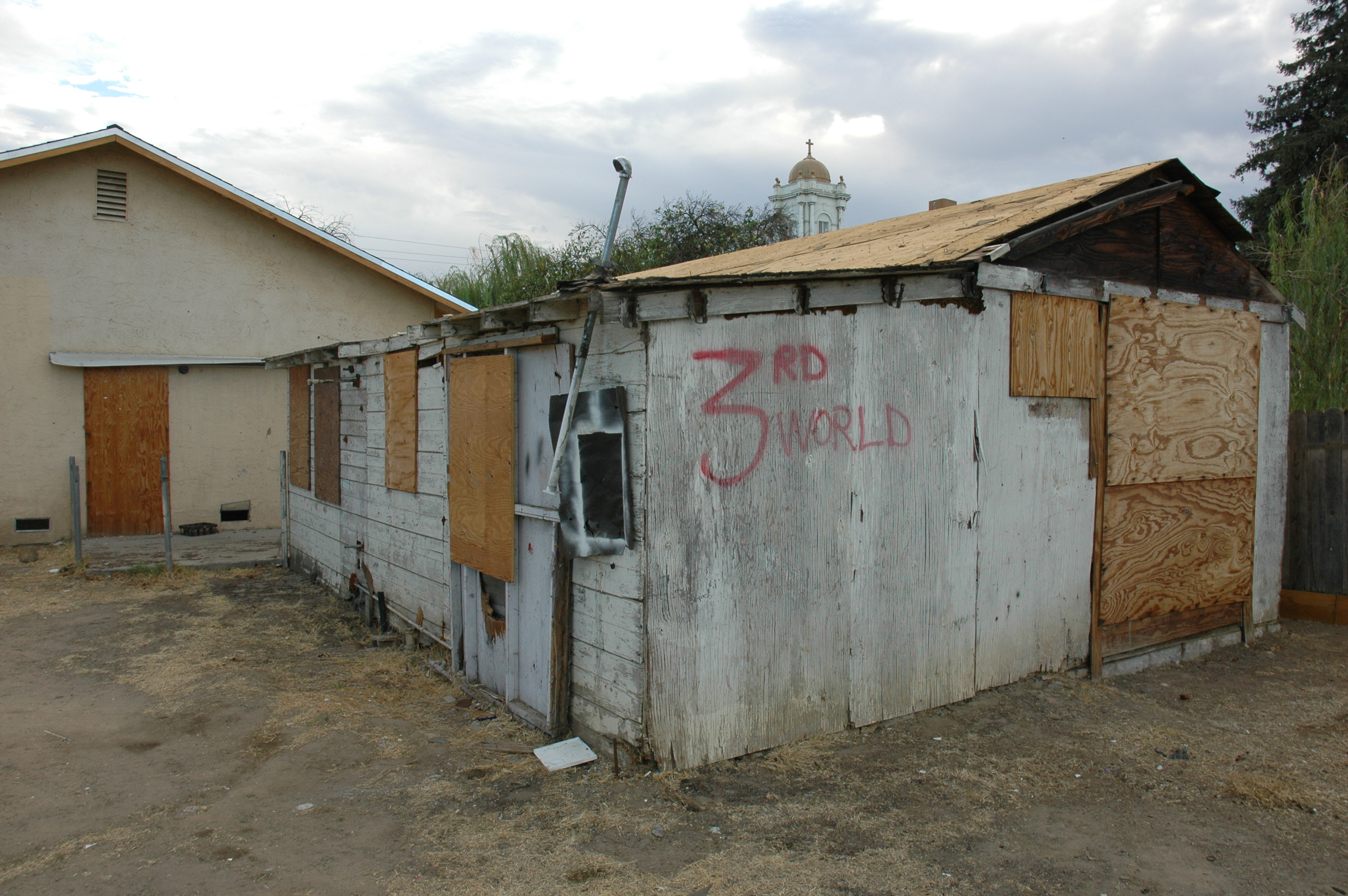
§3rd World

by Mike Rhodes Tuesday Sep 3rd, 2013 1:28 PM

This house sits right across the ally from the homeless encampment. At least 1/2 of the homes in the neighborhood are boarded up and abandoned and yet you have homeless people living all around the area.

In the Claws of The Cruzio Cat: Discriminatory Stonewalling Continues at CruzioWorks in Santa Cruz

Update on Santa Cruz CruzioWorks Discriminatory Treatment of Dan Madison
by Robert Norse ( rnorse3 [at] hotmail.com )
Monday Sep 2nd, 2013 11:07 PM

Four weeks have passed since CruzioWorks took Dan Madison’s several hundred dollars to pay for a 24-hour computer workspace, then turned around several hours later and broke their contract, Continue reading

“Big Top” Bob Panhandles the Public in Santa Cruz!

NOTES BY NORSE:

Lee’s shortage of funds is not surprising and seems to be of his own making.

His office has already received a rare sanction for stalling and failing to deliver evidence in the Santa Cruz Eleven case.   Lee is appealing the $500 fine iimposed by Judge Burdick last January at a cost of thousands of dollars in a 49-page brief.

At a recent court hearing, Burdick urged him to spare the taxpayers the tens if not hundreds of thousands of dollars that a 2-3 week long felony trial for the remaining four of the SC-11 would cost the taxpayers.

The Santa Cruz Eleven were a publicity stunt by Lee in his “Shut Down Occupy Santa Cruz” prosecutions of 2012.  He  targeted peaceful protesters & falsely blamed them for vandalism at the (still)vacant Wells Fargo-lased bank structure at 75 River St.  With no evidence–instead using subsequently discredited “conspiracy” charges and now a tortured “aid-and-abet” theory based on the act that the four were supposedly in the bank, even if they couldn’t have been shown to do anything else.

Since there’s no evidence that any of the remaining four individuals still being hounded actually vandalized anything, this costly trial (now postposted until March 2014) needs to be dropped, obviously, in favor of real public safety concerns.
See https://www.indybay.org/newsitems/2013/08/28/18742256.php and http://www.indybay.org/newsitems/2013/08/27/18742198.php for a more lengthy update and background.

Santa Cruz reactionaries, however, have been successful in diverting attention from the pile-up of real violent crimes that remain unaddressed.  Instead they have focused on their own special scapegoat agenda  to spotlight political protesters and homeless survival campers (raising the old Drug War red herrings with “needlemania”).

This kind of toxic hysteria now has official cover with Mayor Bryant’s “Citizens Task Force on Public Safety” which gathers “testimony” from like-minded bigots every other Wednesday to confirm its obsession with “enabling the homeless menace”.

Lee apparently feels he can do no wrong (even when a judge rules otherwise).  He also seems to think the Board of Supervisors and the taxpayers will roll over every time he screams “crime!”.

Time to spend money addressing real crime instead of backing the bigoted agenda of those who want to criminalize the poor or inflate their own political profile.

This kind of pernicious panhandling is far more deadly and far more expensive than the sparechanging that shocks the merchants and rouses Take Back Santa Cruz to self-righteous fury.

Santa Cruz County’s top prosecutor declares emergency personnel need

By Calvin Men

Santa Cruz Sentinel

Posted:   08/30/2013 06:26:05 PM PDT

SANTA CRUZ — In response to an unusually high number of serious violent crimes set for trial within the next two months, Santa Cruz County District Attorney Bob Lee declared a personnel emergency for his office Friday.

In a letter to County Administrative Officer Susan Mauriello, Lee notified her of the need to add attorneys to his staff because of the abundance of serious criminal cases headed to trial.

At least eight homicide trials are slated for September and October, an unprecedented number that is expected to put a strain on his staff, Lee said.

“Unfortunately, it’s just not stopping and it’s going to reach that conclusion where it’s thin ice,” Lee said in an interview. “If we take more steps without additional support, a case may fall through. Our ability to be successful, to get justice and hold people accountable would be compromised.”

By considering an emergency measure allowed under civil service rules, Lee is permitted to hire extra personnel without approval from the county Board of Supervisors for a period of 60 days — long enough to cover the upcoming trials, Lee said.

After 60 days, Lee will have to defer to the board for approving the extra personnel.

He said funding for the extra attorneys will likely come out of the county’s general fund. But he couldn’t say how many more attorneys will be hired, though there is already a list of candidates.

Each homicide case requires two attorneys dedicated to that case only, making them unavailable for other cases, Lee said.

His office has 33 budgeted positions but many of the attorneys would be largely unavailable because of the eight homicide trials, which include a gang-related homicide of a 14-year-old boy in 2011 and a 2009 murder of a homeless man on the river levee, both in Watsonville. There are also five sexual assault and attempted murder cases during the next two months.
Lee said the high rate of jury trials is due largely to suspects deciding not to settle cases.

After the 60-day period, Lee said he isn’t sure what will happen with extra personnel. He is expected to meet with the board to discuss future budgetary matters in January.
 

Follow Sentinel reporter Calvin Men at Twitter.com/calvinmenatwork

MORE COMMENTS AT http://www.santacruzsentinel.com/santacruz/ci_23986539/santa-cruz-countys-top-prosecutor-declares-emergency-personnel?

Raleigh, N.C. Bans Church Group From Serving Free Breakfast

NOTES BY  NORSE:   Food Not Bombs [FNB], unlike Hollowell’s Love Wins Ministry, has repeatedly ignored “disperse the homeless”-motivated attacks on its free food meals in Santa Cruz, San Francisco, Orlando, and many other cities in the past.   Currently FNB is under attack in Portland, Seattle, Detroit, and Boulder.  (Seehttp://www.foodnotbombs.net/fnb_resists.html).
        In Santa Cruz, food serving has generally been driven out of the Pacific Avenue area either to the ghetto-area of the Homeless (Lack of) Services Center [HLOSC], or to San Lorenzo Park.   Funding for ID checks at the HLOSC  as  well as a $100,000 security gate appropriation (by city and county paranoid-enablers) was passed recently.
        Santa Cruz Food Not Bombs still feeds each Saturday in front of the Main Post office on the sidewalk.  Go to their facebook page to offer support–they need carrot choppers, soup-servers, and postermakers!
        Keith McHenry, FNB co-founder, will be calling in to the stream of Free Radio Santa Cruz at during the Thursday evening show (6-8 PM) and again for a longer interview Sunday sometime between 9:30 AM and 1 PM) at http://tunein.com/radio/FRSC-s47254/ .  Call in with questions at 831-427-3772 or 832-469-3119.
          Free Radio Santa Cruz still desperately needs a transmitter site in Santa Cruz.  If you know anyone with a tall tree or second story house, please contact them at www.freakradio.org .

Standing up with the hungry

Posted: Monday, August 26, 2013 12:36 am | Updated: 12:38 am, Mon Aug 26, 2013.

Jacob Fulk, Staff writer |


Protesters gathered Sunday evening at Moore Square in response to a series of cease and desist requests targeted at groups distributing food to the homeless.


The latest cease and desist request was enforced Saturday morning when the Raleigh Police department, in accordance with a city ordinance, forbade Hugh “The Reverend” Hollowell and his Love Wins Ministry from distributing coffee and breakfast to area homeless people.


“It seemed less like ‘get the people out of the park’ and more like ‘how do we punish homeless people,” Hollowell said.


According to Hollowell his group had handed out breakfast on Saturdays and Sundays for 6 years before the cease and desist request on August 24th.


Raleigh Mayor Nancy McFarlane attended the event to reassure protesters and charitable organizations that no arrests will be made for handing out food at Moore Square.


According to McFarlane at least 32 different groups distribute food at Moore Square. She also said that more homeless people might have their needs met if these groups were more evenly distributed across the city.


“We’ve gotten to where there are so many people coming and and bringing food and wanting to help that it is almost sometimes overwhelming,” McFarlane said.


City officials provided little information as to why police recently enforced the ordinance after years of interaction between organizations and homeless people, though McFarlane and City Councilman Russ Stephenson both cited an overabundance of groups donating and haphazardly dropping off food as reason for reform.


Donald Zepp, leader of Humans Beans Together and former professor of entomology at Cornell Univeristy, said that the police disallowing the distribution of food “came as a complete surprise considering we had police officers previously coming over to us to say ‘thank you for being here’ and ‘we appreciate what you are doing here.’”


Zepp also said he familiarized himself with the city ordinance that prohibits the distribution of food and it could theoretically be applied to extent that “if you’re here with your family and you feed your kid a sandwich, you’re breaking the ordinance.”

Hollowell expressed a surprise similar to that of Zepp, stating that “When a man with a gun tells you that you’re not permitted to do something, what do you do?”


“We are not the mayor’s enemies, we are not the City of Raleigh’s enemies,” Hollowell said. He mentioned that during a conversation with Mayor McFarlane she expressed her own surprise toward the incident and assured him that Love Wins would not be arrested if it returned the following Saturday.


Jes Cronmiller of Food Not Bombs, a political organization that frequently distributes food in Moore Square, noted that the number of people picking up food on Sunday afternoon was below normal. Many of her regulars had forgone acquiring food out of a fear of being ticketed or arrested by the police.


The sentiment of many of the protesters in attendance was that the police overextended their reach and used an obscure ordinance to remove homeless citizens from the park.


According to McFarlane, lawmakers and public safety officials will meet this week to address the future of food distribution in Moore Square and across the city. In the meantime, Love Wins, Food Not Bombs and Human Beans Together plan to conduct their food-giving schedules as normally as they are allowed.

From Harassment to Exile: South Carolina Goosesteps Forward

NOTES FROM NORSE:   The horror story below provides a dark glimpse at what may be down the road for Santa Cruz.  In the last week, four homeless people reported being barred from the Boardwalk and general Beach area (which is required to allow public coastal access to the beach) for looking homeless because, two were told, “we had trouble with homeless people last night”.   Another group of six or seven–I only spoke to two of this group–noted that a force of 6-9 cops and security guards confronted them sitting near a fence and demanded they move.  When they did so and went across the street, they were followed, and told (apparently after a cigarette had been lit) that they were banned from the area for 24-hours.
CruzioWorks, an allegedly liberal workspace and internet provider, has refused to reinstate the homeless Dan Madison and his disabled son, denied access after paying $300 for space and service on August 6th because of a tenant’s appearance-based apprehensions about the two.  [See “Picketing Prejudice at CruzioWorks” at https://www.indybay.org/newsitems/2013/08/14/18741605.php  ].  Madison’s polite attempts to appeal the decision and inquiries by Cruzio customers have resulted in form letters from James Hackett, Works Manager, declining to provide the specifics around the exclusion and refusing to restore his workspace and service.
Palo Alto has passed its ban against homeless in vehicles, denying the poor the right to finance their own shelter–which in California is often a vehicle, to go into effect in a month, and also driven those homeless without vehicles away from community centers at night.  This is not based on any kind of crime wave, but simply a desire to reassure fearful NIMBY’s.  [“Palo Alto votes to shut down Cubberley ‘shelter’ ” at http://www.paloaltoonline.com/news/show_story.php?id=30683 ] Homeless poverty pimp services are being given service contracts that will not provide housing or shelter to those displaced, but apparently lessen the public appearance of blatant cruelty.
Meanwhile in Fresno, anti-homeless arson and shelter-destroying sweeps are on the menu for homeless folks [See “Who is Burning Down the Fresno Homeless Encampments?” at https://www.indybay.org/newsitems/2013/08/12/18741445.php   ].
Back in Santa Cruz, Mayor Bryants homeless-free Task Farce is laying the groundwork for redefining homeless people as drug addicts, bums, nuts,  and drunks with a panel with a preconstructed agenda and a series of “experts” who are preparing the ground for more exclusionary measures.  After persistent pressure, I was able to get city staff to put on line the agendas, staff reports, and audio recordings of these meetings at http://www.cityofsantacruz.com/index.aspx?page=1924  .

South Carolina City Approves Plan To Exile Its Homeless

By Scott Keyes on August 20, 2013 at 2:05 pm

http://thinkprogress.org/justice/2013/08/20/2496741/columbia-criminalize-homeless/


Homeless people need not enter downtown Columbia, SCHomeless people need not enter downtown Columbia, SC


Many homeless people in Columbia, South Carolina are facing an arduous choice: vacate downtown or be arrested.
That’s because last week, the Columbia City Council unanimously approved a new plan — the Emergency Homeless Response” — to remove homeless people from the downtown business district. Here’s how the initiative, which was spearheaded by Councilman Cameron Runyan, will work.

Police officers will now be assigned to patrol the city center and keep homeless people out. They will also be instructed to strictly enforce the city’s “quality of life” laws, including bans on loitering, public urination, and other violations. And just to ensure that no one slips through, the city will set up a hotline so local businesses and residents can report the presence of a homeless person to police.

In order to accommodate all the homeless people who will now be banned from downtown, the city will partner with a local charity to keep an emergency shelter on the outskirts of town open 24 hours a day. However, it’s unlikely the shelter, which can handle 240 guests, will be enough to handle the local homeless population, which numbers more than six times the available beds.

Homeless people can stay at the shelter, but they’re not permitted to walk off the premises. In fact, Columbia will even post a police officer on the road leading to the shelter to ensure that homeless people don’t walk towards downtown. If they want to leave, they need to set up an appointment and be shuttled by a van.

In other words, the 1,518 homeless people in the Columbia-area now have a choice: get arrested downtown or be confined to a far-away shelter that you can’t readily leave. Jail or pseudo-jail.

Michael Stoops, Director of Community Organizing at the National Coalition for the Homeless, told ThinkProgress that this measure was the “most comprehensive anti-homeless measure that [he had] ever seen proposed in any city in the last 30 years.” He likened it to county poor farms that were prevalent throughout the Midwest many decades ago. “Using one massive shelter on the outskirts to house all a city’s homeless is something that has never worked anywhere in the country,” Stoops said.

Homeless advocates may soon file suit to overturn the plan, arguing that the plan violates homeless peoples’ rights to equal treatment under the law and freedom of assembly. The South Carolina ACLU is also exploring the matter. Susan Dunn, the group’s legal director, was highly critical. “The underlying design is that they want the homeless not to be visible in downtown Columbia,” Dunn said. “You can shuttle them somewhere or you can go to jail. That’s, in fact, an abuse of power.”

Columbia’s move mirrors an unfortunate trend sweeping cities across the country: criminalizing homelessness. Already this year, cities as disparate as Miami and Tampa to Palo Alto have passed various ordinances making it virtually illegal to be homeless inside city limits.

South Carolina approves plan to exile its homeless

Homeless people in Columbia, South Carolina will have to choose between leaving the downtown area or getting arrested.
(1) |
|
South Carolline approves plan to exile its homeless. UPI/Hugo Philpott

License photo
Published: Aug. 21, 2013 at 10:29 AM

Columbia homelessness plan draws heated criticism, threat of lawsuits

Published: August 17, 2013

The homeless stand in line waiting for dinner at Ebenezer Lutheran church in Columbia on a Tuesday evening in March 2013.
TIM DOMINICK — tdominick@thestate.com


  • Plan for winter shelter’s 24-hour operation Columbia City Council has adopted a plan to turn the city’s riverfront winter shelter into a centralized, 24-hour operation for a few months while city leaders and homeless service providers look for a site away from downtown to comprehensive services. Here are the primary provisions of the plan:
    •  The 240-bed shelter on the banks of the Broad River would stay open two additional months – between about mid-September and March 30, 2014.
    •  The city would assign nine police officers in three-person shifts to patrol the Main Street business district to keep homeless people out of the city center. Meanwhile, the city would crack down on enforcing its loitering, public urination and other public nuisance laws on those who decline to use the expanded shelter.
    •  The city would post one officer at a key access road to the shelter to be sure homeless do not walk toward the city center.
    •  Homeless adults would be directed from the shelter to services they need such as job placement, medical or mental health treatment. If they refuse, they would be taken to jail.
    •  A telephone hot line would be set up for residents or businesspeople to call if they see a homeless person downtown.
    •  Christ Central Ministries, which had a contract to run the shelter last year, would provide three vans to shuttle homeless clients to daily, off-site appointments.
    •  Christ Central has agreed to absorb the expected $1.2 million it would cost to run a 24/7 operation beyond the current $500,000 the city has budgeted for the shelter.
    •  A citizens committee would monitor how the shelter is operating and be a sounding board for concerns from neighbors and businesses.
    •  A portable kitchen would be set up at the shelter to feed homeless clients in one central location and seek to end the range of meal programs run independently by churches and other concerned groups throughout downtown, causing clients to walk from place to place.
    •  Any inmates released from the county jail or from state prisons would be dropped off at the shelter instead of the Sumter Street bus terminal or other sites. Firm agreements have yet to be reached on this provision.
    SOURCE: Emergency Homeless Response plan

By CLIF LeBLANC — cleblanc@thestate.com

Tempers are flaring as groups prepare to contest Columbia’s plan to remove homeless people from the city center, arguing it violates their constitutional rights.

Civil libertarians say the plan that City Council adopted unanimously last week violates their protections of equal treatment under the law and their freedom of assembly.

“There’s going to be a fistfight,” said attorney Tom Turnipseed, who for more than a decade has been involved in providing Sunday meals at Finlay Park through the Food Not Bombs program.

He said Friday a federal lawsuit will be filed and he expects that the city’s Appleseed Legal Justice Center and the state chapter of the ACLU will at least help if not join the suit.

“I guarantee it’s going to be more than Food Not Bombs,” said Turnipseed, an attorney, a former state senator and a longtime political activist.

Leaders for the Appleseed organization in Columbia and the American Civil Liberties Union stopped short of saying last week they will sue. But leaders of both organizations agree the policy is treading on constitutional protections.

Columbians have debated the “homeless issue” for nearly two decades in a city where on some days the homeless rival the number of shoppers, diners and pedestrians on key downtown streets. But City Council’s sweeping plan has brought the issue to a heated pitch.

Council – which includes three attorneys – agreed to Councilman Cameron Runyan’s proposal to turn the city’s riverfront winter shelter into a 24/7 center where homeless adults could not only sleep, but be provided meals and consult with caseworkers and others who would direct them to medical, mental health, substance abuse and job services.

The expanded center is set to open by Sept. 15 for about six months. It would be run by a faith-based organization that would provide transportation to discourage the homeless from meandering through downtown neighborhoods and businesses.
Perhaps the most controversial feature of the plan involves increasing police patrols in a 36-block business district and at the riverfront shelter to direct the homeless there for help. If they refuse, they could be arrested under a range of public nuisance laws that include loitering, public intoxication, public urination, aggressive panhandling or trespassing.

“I was concerned that it is criminalizing homelessness,” said Sue Berkowitz of the Appleseed center. “People could be targeted and made a suspect class because they’re walking down the street.”

Susan Dunn, the legal director for the state’s Charleston-based ACLU chapter, shares the same concerns.

“Police are not supposed to coerce people into behavior,” Dunn said. “The whole nexus of the relationship between law enforcement and the citizen is that … they have to have reasonable suspicion of a crime.

“The underlying design is that they want the homeless not to be visible in downtown Columbia,” Dunn said. “You can shuttle them somewhere or you can go to jail. That’s, in fact, an abuse of power.”

Vigorous defenses

Runyan argues that his proposal is an act of concern for the homeless with a tough-love approach.

“This is not about new laws. The homeless can’t be exempt from laws the rest of us live by,” Runyan said. “We’re not allowed to be drunk in public. We’re not allowed to urinate in public or camp in public places.

“This is about help and hope for people who are on the streets of this city.”

Asked if he discussed the legality of his plan with the city attorney’s office, Runyan said, “Why would I? The only time you would engage the city attorney’s office is when you’re going to change anything. We’re not changing anything.”

However, Runyan said the city attorney’s office knew for months about his proposal and did not raise concerns.

At least one Columbia lawyer agrees with the policy.

“I’ll debate anybody about the constitutional issue as to whether my rights are equal to the rights of the homeless,’’ said attorney Eric Bland, whose law office is at the corner of Bull and Calhoun streets. “I don’t agree there’s a constitutional crisis here.

“I work at Ground Zero of the homelessness problem,” Bland said. “The homeless have gotten to the point where they enter my property. They come inside and panhandle or ask to use the bathroom. When they’re told no, they get upset. I’ve had homeless key the cars of people in my parking lot. They sleep on my porch. They go through the trash.

“My employees feel unsafe. Clients feel unsafe. I have to carry a gun,” he said.

Bland said drug transactions take place near his law office. Friday morning, a woman and man he believes are homeless got into a profanity-laced argument just outside the firm, he said.

“The lawyers that are screaming aren’t the ones at Ground Zero of this,” Bland said. “They’re not the ones paying the taxes.”
He and a fellow businessman had been contemplating suing the city.

“It’s the city’s obligation to provide for the health and welfare of its citizens,” Bland said. The homeless “don’t have the right to stop people from the use and enjoyment of their property.”

Homeless people who enjoy the shelter, meals and other programs available to them through city government or a myriad of private providers must accept that “you’ve got to stay inside the system,” Bland said.

Legal, practical problems

Berkowitz and Dunn say that deciding who’s homeless might become a challenge.

“How do we identify who is homeless and who is not?” asks Berkowitz of Columbia.

Dunn, of the ACLU, goes further. “The police are being invited to profile by how somebody looks,” she said. “If you appear to be a homeless person, you have no right to be in an area because you’re interfering with business?

“That sidewalk belongs to someone who does not look particularly great just as much as it does to the rest of us,” Dunn said.
She also wonders how the city will deal with the children of homeless people who are arrested. “It’s not addressing the complexity of the problem. A shelter can get them a place to go. But it can’t get them a home.”

Dunn questions Runyan’s argument that the city is merely enforcing its laws.

She asked Columbians to think of it in another way: Imagine the same city laws being trained at teenagers.

“Yes, these laws are in place,” Dunn said. “But they’re going to use them against this particular community.

“What (the homeless) are really being arrested for is not going to the shelter.”

Dunn also wonders how the city can keep private groups, including many churches, from serving meals wherever and whenever they chose.

“The City Council doesn’t have the authority to decide who is going to be generous,” she said.

Turnipseed told council members the night they adopted the plan that Food Not Guns would “go to war” if it is told it can no longer use Finlay Park, a public facility.

Dunn said the ACLU will have to wait to see if they city applies the same crackdown techniques to Five Points revelers, for example. To have legal standing to file a lawsuit, a homeless person or one of the organizations that provides services, would have to ask the ACLU to sue on their behalf.

The small Appleseed organization has turned to a Washington law firm for a legal analysis before deciding whether it will sue, Berkowitz said.

Is message being lost?

Runyan, who has been working on the homelessness issue almost since his term in office began last year, said he does not understand the pushback.

“We don’t think there is any (constitutional) violation,” he said.

“This is not about hurting people. It’s about helping them,” he said. “But we’re not going to allow them to live on our streets anymore.”

The inability of city government or private providers to solve the persistent presence of homeless people in the heart of Columbia has created an atmosphere that attracts that population but leaves them to their own devices most of the day and night, many who work with the homeless said.

The problem is growing worse, though no hard numbers are available on the homeless population inside the city limits, Runyan and neighborhood leaders said.

Runyan laments that the public conversation “has become all about the punitive part of it.”

He contends that most homeless people will accept the use of the expanded shelter.

“There are people who are going to resist it,” Runyan said. “It’s unfortunate that we’re going to have to give them some tough love.”

He gets riled at the objections coming from civil liberty organizations like Appleseed and the ACLU.

“Is the ACLU going to crawl up Greenville’s and Charleston’s backs?” Runyan asks.

“What they’re arguing for, is to leave the homeless on the streets of this city without hope or help.”

Reach LeBlanc at (803) 771-8664.

LOTS OF COMMENTS AT:  http://www.thestate.com/2013/08/17/2926212/columbia-homeless-plan-draws-heated.html#storylink=cpy