Will Santa Cruz Anti-Homeless Bureaucrats Read the Writing on the Wall? [1 Attachment]

[Attachment(s)from Robert included below]


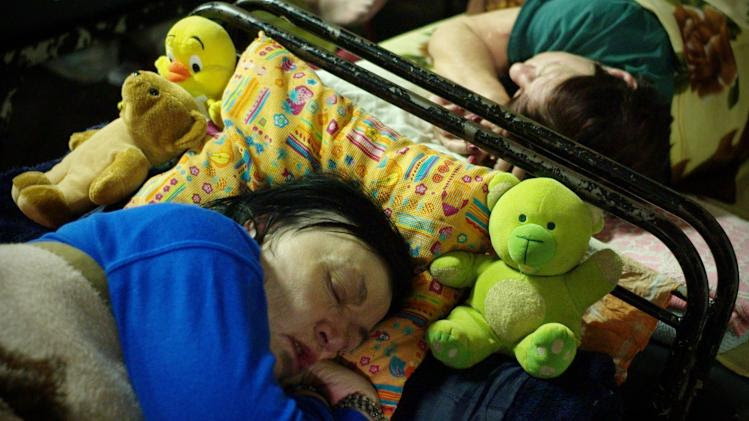
NOTES BY NORSE:  Palo Alto–faced with massive activist organizing and lawsuits–is now about to hold off on its attempt to run homeless vehicle dwellers out of town.  They still have in place ordinances to drive away those without vehicles from unused community centers and parks at night.  The enclosed attachment describes the latest retreat by the gentrification gurus in the face of the likely L.A. 9th Circuit Court hearing d
Santa Cruz for decades (since 1978) has enforced its “sleep in a vehicle at night, get hassled and fined” law in spite of repeatedly-declared Housing Emergencies by the City Council.  A pittance of relief was made in 1995 by “allowing” churches to shelter three vehicles of sleepers, in 1999 by “allowing” businesses and non-profits to shelter two vehicles of sleepers and in 2010 by asserting that all Sleeping Ban citations (including vehicles) would be dismissed for those on the waiting lists of the HLOSC–the Homeless (Lack of) Services Center and/or the River St. Shelter.  All of this was done in response to activist pressure where many people risked fines and jail to bring this to public view.
Yet the bucks-and-bigotry-backked riptide against poor people outside has swept forward.  Over the same period, the use of “permit parking” restrictions banning vehicles at night without permits was used to drive away homeless vehicles (explicitly).  “Loitering” in public parking lots was made a crime–in spite of constitutional findings back in the Larson case in the 80’s that barres such anti-homeless laws (a special gift of Supervisorial candidate Ryan Coonerty when he was Council member).  The harsh and erroneous demonization of homeless people (in spite of rhetorical “concern”) along with sweeps and crackdowns by the Rotkin, Lane, Bryant, and now Robinson City Councils with no meaningful expansion of shelter space has further heightened the emergency.
Local activists and attorneys failed to effectively mount a legal challenge using arguments like those that overturned the L.A. law against sleeping and sitting in L.A. in the Jones decision and subsequent settlement.  Local ACLU remaining deafeningly silent in spite of repeated pleas to supposed homeless sympathizers on their Board of Directors Steve Pleich.
Still, the waves in Los Angeles and Palo Alto coming on the heels of homeless hypothermia centers are a wake-up call to activists who have in the past used winter weather and Xmas sentiments to expose the toxic abuses.  Charity drives aren’t enough.  Should protests take place in places like the Metro Center (where reportedly ‘No Loitering” signs have recently been posted) to open up warming centers at night?  We’ll see.
Thanks to Palo Alto activists Tony Ciampi  and Chuck Jagoda for forwarding  the attachment and article.

Looks like Palo Alto will be staying  the VHO.  See Attachment.http://touch.latimes.com/#section/-1/article/p2p-78447865/


Email
Facebook
374
Twitter
47

Jae C. Hong / Associated Press

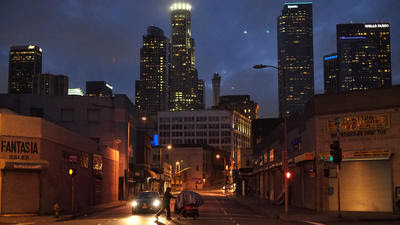
A federal appeals court panel appeared skeptical about a Los Angeles city ordinance that bans people from living in their car. Above, a homeless resident pushes a cart along a downtown street.

By Gale Holland

December 5, 2013, 5:35 p.m.

A federal appeals court on Thursday appeared to be leaning toward striking down a Los Angeles city ban on homeless people living in their cars or recreational vehicles on public streets and in parking lots.A three-judge panel of the U.S. 9th Circuit Court of Appeals, meeting in Pasadena, seemed to embrace arguments from civil rights attorney Carol Sobel that the criminal law was unconstitutionally vague.

“It’s very hard to figure out what you’re talking about,” Judge Marsha Berzon told the lawyer for the city.

The city’s ordinance dates back to 1983, but came under fire in 2010 when a special Los Angeles police task force, responding to neighborhood complaints, began aggressive enforcement in Venice.

A group of homeless car dwellers filed suit in 2011 challenging the law. U.S. District Judge R. Gary Klausner dismissed the suit, and the plaintiffs appealed.

Unlike other cities, which bar sleeping in vehicles or overnight parking, Los Angeles prohibits using cars as “living quarters” both overnight and “day-by-day, or otherwise.”

Deputy City Atty. Blithe Bock told the court that police determined a vehicle was lived in by the “totality of circumstances,” including whether it appeared to be operating.

Drivers were ticketed if police found things in their car such as bottles of urine, clothing and open food that suggested it was a “living quarters,” she said.

“You’re using your car as a living space, you’re using your car as a toilet, you’re using your car as a kitchen,” Bock said.

Sobel said there were no clear standards for what property or items you could keep, or for how long you could rest in your vehicle.

“So you can’t just sit in your car and nod off?” Judge Harry Pregerson asked Bock.

“He was wrapped in a blanket,” Bock responded, referring to one of the plaintiffs.

“What’s wrong with that?” Pregerson said.

Judges also questioned the rationale for the stepped-up enforcement. Bock said it came in response to a spike in crime by young transients and complaints of trash being dumped on neighbors’ property.

“People were coming home and finding refuse on their front lawn,” Bock said.

Sobel suggested that gentrification and tension between new and old residents were the real drivers of the heightened enforcement, and Pregerson seemed to agree.

“Tell me if I’m wrong,” Pregerson told Bock. “You had a task force of police officers who were told their job was to clean up the Venice area of all these homeless people because people in the neighborhood didn’t like it.”

Pregerson also suggested there are better ways to handle homeless people than rousting them from their cars.

“Long Beach treats people differently,” he said. “If they find a family, they take the kids and get them in a facility and make sure they’re enrolled in school…. The next thing they do is try to find housing for them…. Why can’t the city of Los Angeles do that?”

“The situation is heartbreaking,” Bock answered. “But it is a question for legislators.”

“That’s a cop-out,” Pregerson shot back.

After the hearing, Bock said police referred car dwellers to shelters and other services that could help them get off the streets.

“Homelessness is a horrible problem, we’re all aware of that,” she said. “But we have a whole city to take care of.”

A police spokeswoman said the department is continuing to enforce the vehicle habitation ban. Outside court, some of the homeless plaintiffs and their supporters accused the city of trying to drive them out of town.

“They’re intimidating people, driving up and making a lot of noise,” said plaintiff Steve Jacobs, who lives in his SUV in Venice. “There are fewer and fewer RVs there all the time.”

The court is likely to rule on the case in the next few months

Attachment(s) from Robert

1 of 1 File(s)

Santa Cruz City Council reverses restrictions on public assembly


Play slideshow Play slideshow Save all photos Save all photos Want to save all these photos at once? Learn how
Online pictures are available for 30 days
NOTE TO READER: HUFF member, Robert Norse, first alerted others that peaceable
assembly was likely to be cut drastically by a new City ordinance. 4 HUFF members went directly
 to the local ACLU and sought action from this largely inactive chapter. Following this
December 2nd meeting, ACLU members lobbied the City Council successfully to restore
 the restrictions as HUFF had sought. — Becky Johnson of HUFF
HUFF Photo: ACLU deliberates at Louden Nelson Ctr.
on Dec 2 2013, listens to HUFF members concerns
re: loss of public space, harassment of homeless people
by members of the SCPD, & about the limitations on
peaceable assembly.

Santa Cruz council reverses public gathering permit limit

By J.M. Brown

FOUND ONLINE HERE

Santa Cruz Sentinel

Posted:   12/10/2013 06:23:25 PM PST


SANTA CRUZ — The Santa Cruz City Council on Tuesday reversed an earlier decision to reduce the limit of public gatherings to 50 people before a city permit is required.

Five-time former mayor Mike Rotkin, speaking on behalf of the Santa Cruz County American Civil Liberties Union chapter, urged keeping the limit at 100. He said the city has not demonstrated how less than 100 participants in a rally or other event pose a public safety risk that would justify a restriction on free speech.

“Changing the threshold from 100 to 50 people would immediately impact the ability of people to organize protests at the town clock and county building steps,” he said.

Mayor Hilary Bryant and Councilmen Don Lane and Micah Posner voted in favor of keeping the number at 100 on Nov. 26 but lost on a 4-3 majority. Posner raised the issue again Tuesday during a final reading of ordinance changes governing public expression and commercial events, and council members agreed unanimously to make the reversal.

“As public assemblies get larger, almost invariably there are traffic impacts,” Posner said. “From the stand point of freedom of assembly, (traffic costs) shouldn’t trump those considerations.”

The city’s special events coordinator, Kathy Agnone, said there are several public places downtown where more than 50 participants in rallies or other events can cause traffic problems, and the proposed rule change was designed to help the city plan better. The city permit would not cost anything unless a street closure was required.

“I positively regret that this was something seen as penalizing and criminalizing folks gathering because that’s not what this is about,” Agnone said. “We are really just trying to be reasonable and streamline the process.”

Councilwoman Cynthia Mathews moved the proposed reversal as a good-will gesture, saying she hopes common sense will prevail.

BOARDWALK LOT

Tuesday, the council approved on a 6-1 vote an agreement with the Santa Cruz Seaside Co. to share in revenues generated by improvements to the Beach Boardwalk’s primary parking lot.

To ease traffic congestion on Beach Street and create more street parking during the peak summer season, the company has proposed $1 million in changes, including reconfiguring the lot to create 150 new spaces, add two entrances and establish pay stations upon exit.

Since 1984, the Boardwalk has collected a 10 percent tax for the city on its parking fees. The council agreed to return 50 percent of the tax revenue generated by the new spaces during the next 10 years not to exceed $200,000.

“We think these kinds of agreements spur economic activity,” Seaside Co. spokesman Kris Reyes told the council, echoing Economic Development Director Bonnie Lipscomb, who said the city has had to seek creative ways to form public-private parternships now that redevelopment has been eliminated.

Councilman Posner voted against the plan, saying the Boardwalk’s annual profit on the new spaces — expected to exceed $350,000 — is sufficient to recoup its own investment in the lot with a few years. He called the tax-sharing agreement “an inappropriate use of public funds.”

Vice Mayor Lynn Robinson disagreed, saying, “I understand there is a profit to be made, but there is a huge public benefit here that I see.”

The council also OK’d allowing the Tannery Arts Center to seek a property tax exemption for the performing arts theater planned for the city-owned Hide House. The council also allowed dropping “Hide House” from the name to accommodate a significant naming-rights donor.

Tuesday, the council also approved setting a public hearing for March 11 to increase wastewater rates during a four-year period. To stabilize the wastewater budget and fund capital improvements, rates are proposed to increase nearly 6 percent each year on average for single-family users for three years then 2.5 percent in the final year.

The council also commended winners of the annual Officer Jim Howes Community Service Award: police officer Ken Deeg, outgoing city arts coordinator Crystal Birns and Santa Cruz Neighbors co-founder Michael Bethke. Howes retired after 26 years as a police officer known for community engagement.

Follow Sentinel reporter J.M. Brown at Twitter.com/jmbrownreports


City Council Right-Wingers Next Target: Public Assembly 2 PM 10-10


Title: Constricting and Restricting Public Assembly Back at City Councl
START DATE: Tuesday December 10
TIME: 2:15 PM – 2:45 PM
Location Details:
Santa Cruz City Council Chambers
Exact time is uncertain, but the laws are items #14 and #15, directly after the Consent Agenda. To be safe, show up at 2 PM.
Event Type: Meeting
COUNCIL MEETS AT 2 PM
The Council will again be convening at the unusual time of 2 PM. Probably because the Coronation of incoming Mayor “Rattlesnake” Robinson (so termed because of close collusion with the anti-homeless and vicious Drug War policies of Take Over Santa Cruz.For those interested there traditionally been a post-coronation cakes-and-drinks celebration across the street in the Civic Auditorium to which the public is invited. This has been a chance to mingle with those in power and spend a little time indoors before returning to the freezing streets.

THE NEW LAWS
Agenda item #15 restrictvely rewrites the entire sections on public demonstrations for what were previously termed “Commercial and Non-commercial Events.” They have been relabeled “Public/Major Events” & “Public Gathering and Expression Events”

The staff report can be found at http://sire.cityofsantacruz.com/sirepub/cache/2/gm3nxoa24g4uqu55k4gs1zrb/382360111252013053508496.PDF .

Quite simply, the law rewrite criminalizes protests that have more than 50 participants (previously the “allowed” maximum was 100). permit requirement has now tightened apparently so that 50 rather than 100 people require a permit. Marching in the street is no longer provided for except through costly street closures. Permits must be applied for 5 days rather than 36 hours in advance.

PRIOR HISTORY
The law passed 6-1 at the First Reading and is likely to slide thru the Council swamp like shit through a goose tomorrow. I pointed out that most protests don’t seek permits—that’s the point of protests: the First Amendment is our permit.

Repressive authority from Birminghan Alabama in the 60’s the murdering generals in Egypt in 2013 have all used “permits” as a way of suppressing dissent.

I encourage indybay readers to examine this ordinance themselves. Like the Sidewalk Shrinkage ordinance severely reducing space for public performance, political tabling, panhandling, vending, and art display, this ordinance passed its first reading without police testimony that the current law has any problems.

Kathy Agnon, the Permitmeister, presented a very sunny account of the proposed new laws. She however didn’t provide any documentary evidence indicating a history (either anecdotal or otherwise) of such problems.

PUBLIC RECORDS–STILL NOT PROVIDED
My attempt to get public records was delayed by Agnon & other city staff, in spite of what I’d thought were assurances from Nydia Patino. I’d hoped to have records of permit applications and rejections for the last six months available. Accordingly, as usual, we have the staff’s arguments in favor of laws instead of any solid evidence that there’s a real problem that needs fixing. We need some more objective record beyond Agnon’s expertise and good will.

For the texts of the old and new laws, go to http://sire.cityofsantacruz.com/sirepub/mtgviewer.aspx?meetid=479&doctype=AGENDA and look up agenda item #12. You can also view the video of public testimony and Council discussion there.

The texts of the proposed Public Assembly-restricting new laws is also available at http://sire.cityofsantacruz.com/sirepub/mtgviewer.aspx?meetid=482&doctype=AGENDA without the clarification of what’s being changed.

If you value your right to publicly assemble and march in any cause, this ordinance should have a big red warning light attached to it, considering the make-up of the Council.

GLOOMY PROSPECTS AHEAD
The likely next mayor (Lynn Robinson), and the past record of this Council and the City Manager in cutting back public space, public assembly, and public accessibility suggests empowering the police in unhealthy ways—even against smaller gatherings, to say nothing of the DIY New Year’s Parade coming up in several weeks.

Considering the phony hysteria generated around “public safety” that is likely to be front and center on “Rattlesnake” Robinson’s January agenda, further restrictions on the right to gather to demand redress of grievances is the last thing we want right now.

MORE OF THE SAME PSUEDO-PUBLIC SAFETY
The parallel with the recent ordinance changes constricting street performance and art is instructive. The hypocrisy and special interest nature of the “display device” ordinance was obvious then and has become more obvious since.

Obstructive commercial signs have sprouted on the Pacific Avenue sidewalks in spite of the balleyhooed “trip and fall” pretext used to criminalize laying out a blanket.

This “danger” as well as the Robinson-Comstock-Mathews “upscale aesthetics’ concerns also prompted the constriction of tabling, vending, and performance space, and the expansion of “forbidden zones” now encroaching on 95% of the sidewalks downtown for non-merchant activity.

HARASSMENT REPLACING TICKETING
But probably many have noticed that most every performer, vendor, even political tabler down there is in violation of the letter of the law as passed on September 24th—as pointed out in a recent Santa Cruz Weekly article.

Hosts and police have given out few if any citations, but harassment has stepped up. Some cops are now claiming that craftspeople are allowed to display their jewelry/art for donation only 6 times a year and must thereafter get a business license..

So may it be with this “Parade Permit” ordinance–last hauled out notoriously to ticket Whitney Wilde, Curtis Reliford, and Wes Modes for “walking in a parade without a permit” on a DIY New Years event 3-4 years ago.

I have been in at least several dozen marches down Pacific Avenue in the last few decades, probably more, and none of them had a permit. Nor were there citations, arrests, and/or prosecutions to my knowledge. But enabling police, the city attorney, and compliant bureaucrats with restrictive laws is not a good idea.

Defending the traditional freedoms Santa Cruz peaceful protesters have enjoyed ultimately requires exercising them. For the first time “political signs” were “allowed” in the Xmas parade last Saturday (though I’ve always ignored such clearly unconstitutional restrictions).

The ordinance coming up tomorrow on the afternoon agenda empowers more repression and makes spontaneous protest more risky, They need to be sent back for a public process of discussion–with those directly affected and with the public at large.

Earlier info on the first reading at http://www.indybay.org/newsitems/2013/11/25/18746832.php

San Jose: Four people die of exposure overnight, three of them at homeless encampments


By Mark Emmons

memmons@mercurynews.com


Posted:   12/06/2013 02:36:23 PM PST


The Santa Clara County coroner’s office confirmed four people died of hypothermia-related causes Thursday night as temperatures plunged below freezing.

Sources say that three of the people died of exposure in three separate homeless encampments while a fourth person died in a garage during the cold snap.

The coroner’s office declined further comment early Friday afternoon. The Santa Clara County Office of Emergency Services referred questions to a county spokesperson, who did not immediately return phone calls.

“I’m just angry,” said Jenny Niklaus, the CEO of EHC LifeBuilders, a provider of homeless services. “We have to solve this problem. Even with our cold-weather shelters open, there are still people out there. This is what happens when we allow homelessness to happen. People die.”

A line forms outside the National Guard Armory, Sunnyvale, one of the cold-weather shelters that opened this week; 2009 photograph. (Josie Lepe, Mercury News)

Temperatures throughout the greater San Jose area reached a low in the mid-20s in the overnight hours, according to the National Weather Service. The low at Mineta San Jose International Airport was 30 degrees, breaking the previous Dec. 6 record of 32 degrees in 1931.

More freezing weather is expected later this weekend.

Santa Clara County Supervisor Mike Wasserman, who has been an advocate of funding programs that help get chronically homeless into permanent housing, said the deaths are just the latest example of the seriousness of the problem.

“People are dying out there, and it’s just wrong,” Wasserman said. “I hope to god this never happens again. You have to understand that every single person in these encampments is somebody’s son or daughter, brother or sister, mother or father. And yet they’ve been just abandoned.”

EHC LifeBuilders opened up its county-funded Cold Weather Shelter Program last Monday night with 275 emergency beds at three sites in advance of the cold snap. After these deaths, an additional 200 to 300 temporary beds were being added. Also, the shelters will remain open for additional two hours in the morning.

Outreach workers from the agency as well as other local nonprofits InnVision Shelter Network, the Bill Wilson Center and Downtown Streets Team spent Friday combing the encampments, parks and streets as they handed out blankets and encouraged people to go to the shelters.

“We’ve got a cold weekend ahead of us and our goal is make sure nobody has to be outdoors,” Niklaus said. “But the fact is there are more people outside than we have beds. We’re doing what we can, and I don’t want to lose any more people. This is a crisis.”

San Jose/Santa Clara County has the fifth-largest homeless population in the country behind only New York City, Los Angeles, Seattle and San Diego, according to a recent U.S. Department of Housing and Urban Development report.

Of the 7,631 homeless, who were counted in January as part of a nationwide census, 74 percent were listed as “unsheltered” — meaning they have no place suitable for human habitation to stay. It has been estimated that on any given night, there are 5,000 people outside in the county.

Evening temperatures in San Jose were expected to warm up Friday night and then drop back to around 30 degrees on Saturday night, according to the National Weather Service.

“The question we have to ask ourselves is how many people have to do die?” said Jennifer Loving, executive director of the nonprofit Destination: Home. “It’s cold outside and people can’t survive when it’s freezing. That’s just a fact. This shouldn’t be a surprise to anyone.”

The deaths are a sad reminder of just how dangerous it is to be homeless. On Dec. 19, EHC LifeBuilders will hold its annual memorial ceremony remembering those who have died on the streets over the past year. Niklaus believes the total will be more than 40 this year.


COMMENTS

NOTE FROM NORSE:  Chuck Jagoda, whose letter is included below, is a Palo Alto activist struggling–as any of us in Santa Cruz struggled two decade ago to open up the Armory as emergency shelter in the winter–though it served (and serves now) only a fraction (100) of the homeless community here (1500-2000).   In Santa Cruz, it’s also a costly psuedo-solution, run by the military which prohibits support animals, doesn’t allow users to come in later in the evening if they have jobs, doesn’t allow conjugal activity, can’t be driven to directly, and is essentially one big room filled with 50-100 people on cots–which can be difficult when some are ill and some are Vets with PTSD.
The Homeless (Lack of) Services Center has recently been misinterpreting MC 6.36.055, which requires dismissal of camping tickets if one is on the waiting list of two always-filled shelters or if the armory is filled.  Instead, I was told last week that being on the waiting list does not give you automatic dismissal of the $156 citations–as it has before the Armory opened.  Instead the Armory must have been full that night–which is often only the case on rainy or cold nights.  Harsher policies being followed by the city attorney in the wake of homeless-ophobia by groups like Take Back Santa Cruz have prompted misdemeanor prosecutions if more than three tickets are left unpaid for–with a fine of up to $1000 and a jail term of up to 1 year.   These are terrorist tactics, used to appease bigots, who feel that harsher policies will make Santa Cruz “less welcome” and “less enabling” to homeless people, who, they mistakenly believe, flock to Santa Cruz to use drugs, steal, and harass customers and merchants downtown.

  I have a dim view of the Armory, though I risked ail two decades ago to get it open.  It is used instead of opening up buildings or campgrounds that would be much cheaper and more convenient.   Under the incoming Mayor Robinson, who has asserted her hostility to homeless civil rights and homeless services and after the Council’s acceptance of the Public Safety Task Force, things are likely to get worse.


From: cruiserterry@aol.com
Date: Fri, 6 Dec 2013 22:42:33 -0500

I remember the armory like it was yesterday.
Stood in line there. Spent Christmas there.
Some nights we would be turned away after being in line for hours.
It was so cold at night I was thankful to have a car to sleep in.
I had to sleep sitting up because of my two kids.
It was soooo cold I would waste a little gas to keep the car warm.
Diane

Sent: Fri, Dec 6, 2013 6:37 pmSubject: Fwd: San Jose: Four people die of exposure overnight

Yet Sunnyvale’s armory shelter–in which homeless would NOT have frozen to death and the 150 safe, warm shelter beds inside the armory–is set to be destroyed after this winter.

It is to be “replaced” by 47 “permanent” (which means as long as the residents have left after years of homelessness) housing.  This is a pure joke.  No one is buying or renting or living in the other “permanent housing” that has been built near the armory.  At night from the armory parking lot you can see the rows upon rows of dark windows–no one is in those homes.  What makes anyone thinks 47 more units will house presently homeless people there?  And even if that does happen, what about the 100 presently homeless who will no longer have a place to sleep in the winter?  (Assuming 47 will be in the permanent housing that will “replace” the armory)

There is nothing wrong with building permanent housing, using a Housing First approach, or making more permanent housing available to unsheltered people.  All are great ideas.

What is VERY wrong is the destruction of viable temporary shelter.  Does anyone think that such shelter won’t be needed next winter?  If such a person exists (pay attention Housing, Homeless, and other officials) thinks so, let him/her answer this?  If three houseless folks died WITH the alternative of an armory, how many do you think will die WITHOUT that protection?

From someone who’s been homeless in Santa Clara County for four years to anyone who cares about the survival of unhoused people–please do not continue to subtract temporary shelter opportunities until and unless there are no homeless people still alive who need them.  

The promise of permanent housing is a wonderful thing–and a long road–and a government promise.  I remember other government promises–like Urban Renewal, fifty years ago.  It really turned out to be Urban Removal–as perfectly viable neighborhoods (at least in some cases) were destroyed and nothing was built to replace them.

As one Holocaust survivor put it–“You don’t throw out dirty water until you have clean water.”  That is survival mode.  That is what unsheltered people live in–survival mode. Do you know that homeless people die at four times the rate of non-homeless?  Did four housed people freeze to death in Santa Clara County while these four homeless people did? I didn’t read about it and I doubt it happened

None of the officials who so easily talk about permanent housing for 47 people as justification or even explanation for destroying the 150 shelter beds at the armory–I very much doubt that any of them would give up their present lodging for a PROMISE of permanent shelter at some future, unspecified, date.  Yet that is the plan they actually, publicly are trying to sell.  

Please don’t ask us to accept a bad bargain none of you would look at twice if it involved you or your loved ones

–Chuck Jagoda

If you can’t scare ’em out, starve ’em out…

If you can’t scare ’em out, starve ’em out…
To: HUFF yahoo groups <huffsantacruz@yahoogroups.com

>
Cc: GPerry of the SC Weekly <gperry@santacruzweekly.com>


NOTES BY NORSE:  Ironically it was during the Xmas season the attacks on homeless food providers in Santa Cruz escalated.  Mass arrests began in January 1989 in a half-year long struggle that ended with the uniformed food filcher’s giving up and (a) ending–for a time–their attacks on those regularly serving food outdoors to homeless people downtown, and (b) setting up a meal at 115 Coral St. (then a vacant lot and a garage behind the  River St. mini-Shelter).
A year later police raided Las Chorales (or “Lost Charlie’s” as some called it–on Front St. near where the Community Credit Union is now because that restaurant was both feeding the homeless and allowing tem to fall asleep–in the month after the earthquake.  At that time Salvation Army and United Way made a nasty distinction between the pre-earthquake homeless and the post-earthquake homeless, cutting off the former and providing aid to the latter.
Keith McHenry’s recent account of attacks on food servers can be hard on the audio file of my streaming radio show at http://huffsantacruz.org/radio/brb/BB%2012-1-13.mp3(1 hour and 47 minutes into the file).  Keith has written about actions against Food Not Bombs chapters recently at http://www.foodnotbombs.net/fnb_resists.html and at http://anarchistcook.wordpress.com/2013/10/24/the-world-series-of-hunger-the-nationwide-campaign-to-hide-hunger-goes-into-extra-innings/.

Restaurant Forced To Stop Feeding The Homeless After Complaints From Nearby Businesses

By Scott Keyes on December 4, 2013 at 10:30 am

Restaurant Forced To Stop Feeding The Homeless After Complaints From Nearby Businesses

Homeless SurveyCREDIT: AP

For years, a small restaurant in western Indiana served a free meal to customers every Thursday. Unsurprisingly, it was a big hit, especially among those who struggle to regularly afford a hot meal. And the number of people needing assistance has “exploded” recently; the number of people served at soup kitchens has nearly doubled in the past year, as the Lafayette Journal and Courier noted in its investigation.

But Buttery Shelf Eatery served, instead of serves, free meals because of persistent complaints from some nearby businesses who did not appreciate the presence of poor people in the area and forced the restaurant to end its free lunches.

Despite the large crowd that showed up to Buttery Shelf Eatery — up to 70 people at a time — there have been relatively few incidents between patrons and no one has been arrested or even had to file a police report.

Ravallette, a volunteer who used to receive free lunches and now helps hand them out, liked the sense of community at the gatherings. “What I liked most about it is that a lot of times, when you go into a public place, you don’t see a representative segment of the community.”

Leading the charge against Buttery Shelf Eatery is Jerry Kalal, a former marine who opened K. Dee’s Coffee and Roasting Co. in 2007 and felt that the free lunches were scaring away customers. He estimated he lost between $500-$800 in weekly sales as a result.

Kalal complained to Buttery Shelf owner Cherrie Buckley, telling her, “You do this little soup kitchen, but you’re closing down all the other businesses.”
Buckley refused as long as she could. Serving the needy and homeless has been an important value in her life for decades, opening a food and clothes pantry for the needy back in 1995.

But Kilal was persistent. He regularly contacted the police to complain about Buttery Shelf patrons, but his claims were deemed specious. Others in the area filed complaints as well. In one instance, someone told police that a couple dozen people were doing drugs behind Buttery Shelf. Unknown to the caller, however, was that police already had an officer watching on the scene who noted that the people “were just standing there waiting for the place to open.”

The most serious violation police ever encountered was patrons blocking traffic, due to the long line to receive a meal.

Finally, after enduring what one supporter described as “bullying” for many months, Buckley decided she had to end the free lunch program.

This story — a mensch (or group of mensches) serves the needy, only to be shut down by the local government or nearby businesses that didn’t want the presence of homeless people — has played out in countless communities. In Los Angeles, the city council is considering a proposal to ban distributing food to homeless people in public because of complaints from neighbors. In Raleigh, a charity that for years had served meals to the needy was threatened with arrest if they continued. In Orlando, police arrested people who violated a city ordinance by feeding the homeless in public.
The problem boils down to the Not In My Backyard (NIMBY) syndrome. Nobody wants homeless people to starve, but many segments of society want them to be taken care of elsewhere. Instead of considering poor people a valued part of the community, they’re a “problem” that should be dealt with somewhere out of sight. Of course, everywhere is somebody’s backyard, and so local governments like Columbia end up passing proposals to exile its homeless population as far away from downtown as possible.

For her part, Buckley is distraught over having to cease her bakery’s outreach to the poor. She recently posted on its Facebook page: “We appreciate your support. But it is what it is and most people will not change how they feel. We too hope that one day we will be able to feed the community again.”

(HT: Former ThinkProgress intern Kirsten Gibson.)

MORE COMMENTS AT http://thinkprogress.org/economy/2013/12/04/3015111/homeless-restaurant-indiana/


NOTES BY NORSE:  Ironically it was during the Xmas season the attacks on homeless food providers in Santa Cruz escalated.  Mass arrests began in January 1989 in a half-year long struggle that ended with the uniformed food filcher’s giving up and (a) ending–for a time–their attacks on those regularly serving food outdoors to homeless people downtown, and (b) setting up a meal at 115 Coral St. (then a vacant lot and a garage behind the  River St. mini-Shelter).

                  A year later police raided Las Chorales (or “Lost Charlie’s” as some called it–on Front St. near where the Community Credit Union is now because that restaurant was both feeding the homeless and allowing tem to fall asleep–in the month after the earthquake.  At that time Salvation Army and United Way made a nasty distinction between the pre-earthquake homeless and the post-earthquake homeless, cutting off the former and providing aid to the latter.
Keith McHenry’s recent account of attacks on food servers can be hard on the audio file of my streaming radio show at http://huffsantacruz.org/radio/brb/BB%2012-1-13.mp3(1 hour and 47 minutes into the file).  Keith has written about actions against Food Not Bombs chapters recently at http://www.foodnotbombs.net/fnb_resists.html and at http://anarchistcook.wordpress.com/2013/10/24/the-world-series-of-hunger-the-nationwide-campaign-to-hide-hunger-goes-into-extra-innings/.

Restaurant Forced To Stop Feeding The Homeless After Complaints From Nearby Businesses

By Scott Keyes on December 4, 2013 at 10:30 am

Restaurant Forced To Stop Feeding The Homeless After Complaints From Nearby Businesses

Homeless SurveyCREDIT: AP

For years, a small restaurant in western Indiana served a free meal to customers every Thursday. Unsurprisingly, it was a big hit, especially among those who struggle to regularly afford a hot meal. And the number of people needing assistance has “exploded” recently; the number of people served at soup kitchens has nearly doubled in the past year, as the Lafayette Journal and Courier noted in its investigation.

But Buttery Shelf Eatery served, instead of serves, free meals because of persistent complaints from some nearby businesses who did not appreciate the presence of poor people in the area and forced the restaurant to end its free lunches.

Despite the large crowd that showed up to Buttery Shelf Eatery — up to 70 people at a time — there have been relatively few incidents between patrons and no one has been arrested or even had to file a police report.

Ravallette, a volunteer who used to receive free lunches and now helps hand them out, liked the sense of community at the gatherings. “What I liked most about it is that a lot of times, when you go into a public place, you don’t see a representative segment of the community.”

Leading the charge against Buttery Shelf Eatery is Jerry Kalal, a former marine who opened K. Dee’s Coffee and Roasting Co. in 2007 and felt that the free lunches were scaring away customers. He estimated he lost between $500-$800 in weekly sales as a result.

Kalal complained to Buttery Shelf owner Cherrie Buckley, telling her, “You do this little soup kitchen, but you’re closing down all the other businesses.”
Buckley refused as long as she could. Serving the needy and homeless has been an important value in her life for decades, opening a food and clothes pantry for the needy back in 1995.

But Kilal was persistent. He regularly contacted the police to complain about Buttery Shelf patrons, but his claims were deemed specious. Others in the area filed complaints as well. In one instance, someone told police that a couple dozen people were doing drugs behind Buttery Shelf. Unknown to the caller, however, was that police already had an officer watching on the scene who noted that the people “were just standing there waiting for the place to open.”

The most serious violation police ever encountered was patrons blocking traffic, due to the long line to receive a meal.

Finally, after enduring what one supporter described as “bullying” for many months, Buckley decided she had to end the free lunch program.

This story — a mensch (or group of mensches) serves the needy, only to be shut down by the local government or nearby businesses that didn’t want the presence of homeless people — has played out in countless communities. In Los Angeles, the city council is considering a proposal to ban distributing food to homeless people in public because of complaints from neighbors. In Raleigh, a charity that for years had served meals to the needy was threatened with arrest if they continued. In Orlando, police arrested people who violated a city ordinance by feeding the homeless in public.
The problem boils down to the Not In My Backyard (NIMBY) syndrome. Nobody wants homeless people to starve, but many segments of society want them to be taken care of elsewhere. Instead of considering poor people a valued part of the community, they’re a “problem” that should be dealt with somewhere out of sight. Of course, everywhere is somebody’s backyard, and so local governments like Columbia end up passing proposals to exile its homeless population as far away from downtown as possible.

For her part, Buckley is distraught over having to cease her bakery’s outreach to the poor. She recently posted on its Facebook page: “We appreciate your support. But it is what it is and most people will not change how they feel. We too hope that one day we will be able to feed the community again.”

(HT: Former ThinkProgress intern Kirsten Gibson.)

MORE COMMENTS AT http://thinkprogress.org/economy/2013/12/04/3015111/homeless-restaurant-indiana/

Confront Task Farce Hysteria Tuesday


Title: Confront Task Farce Hysteria Against the Homeless
START DATE: Tuesday December 03
TIME: 6:30 PM – 8:30 PM
Location Details:
Outside City Hall Chambers in Santa Cruz 809 Center St.
Event Type: Protest
Contact Name Robert Norse
Email Address rnorse3 [at] hotmail.com
Phone Number 831-423-4833
Address 309 Cedar PMB #14B Santa Cruz, CA 95060
There have been six months of largely closed-to-public-comment “hearings” by this group personally chosen without public input or homeless representation by Mayor Hillary Bryant in response to pressure from homeless-hostile groups: Ken Collins’ Clean-‘Em-Out Team, Pamela Comstock’s Take Over Santa Cruz, and Lynn Robinson’s Santa Cruz NIMBY Neighbors.

A pre-selected group with a pre-fabricated agenda has kidnapped the label of “Public Safety” to demonize homeless illegal drug users and homeless people generally.

Now their “investigation” and “research” with the usual conclusions of more police, harsher jail time for life-sustaining behavior like survival camping, and amped up Drug Prohibition is ready for ratification by incoming Mayor-to-be Lynn Robinson and her cabal of frightened or complacent politicians.

Speaking truth to this dank den may not be the most pleasant task, but the community needs to hear it.

Bring sleeping bags, signs, musical instruments, friends, and warm blankets.

Hot vegan food will be provided by JumboGumbo Joe Schultz.

We will have a speak-out to decide on next steps to address the callous crackdown and upcoming freezing winter weather.

Subsequent actions later that night will be decided then.

Sleeping or covering up with blankets is a crime in Santa Cruz after 11 PM.

It is illegal to be on the grounds of City Hall with a protest sign after City Council closes its meeting.

There is shelter each night for less than 5% of the City’s unhoused population.

These facts tell the tale.

Strike Back at Task Farce Terrorism Tuesday 12-3; PROTEST AT 6:30 PM

The latest chapter in the City’s crackdown on homeless people will be played out Tuesday night at City Hall in the 7 PM Special Session of City Council.


The ratification of the wretched Task Force for Anti-Homeless Hysteria recommendations come up shortly at City Hall (809 Center St.).

Recommendations include increased penalties for life-sustaining behavior, more funding to homeless-harassing police and security, pressure on the courts to “crack down”, a ramp-ed up “War on Drugs”…and more!

Steve Schnaar’s critique of the recommendations (and links to the recommendations themselves) is at https://www.indybay.org/newsitems/2013/11/26/18746864.php?show_comments=1#18747067  .

My response is at https://www.indybay.org/newsitems/2013/11/30/18747066.php .

Prepare for a long cold winter. 

PROTEST AT CITY HALL WITH JOE SCHULTZ’s  JUMBOGUMBO!  6:30 PM ! 

Public Safety Danger in Santa Cruz: Gunmen Armed with Badges and Attitude

Off-Duty SCPD Cop Draws Gun on Salvation Army Food Seeker

by Robert Norse and Colin Campbell Clyde
https://www.indybay.org/newsitems/2013/11/29/18746999.php?show_comments=1#18747000

Friday Nov 29th, 2013 2:44 PM

Several witnesses at the Tuesday Salvation Army Thanksgiving Meal including the mother of the victim reported that Officer Hernandez assaulted Jasmine Byron by knocking a plate of food out of her hand, threatening her with his gun, and subsequently taunting her from his car. Hernandez’s stated objective: to stop Jasmine from trying to take a plate of food out the door after having she said she’d asked permission to do so.

Yesterday on the stream of Free Radio, I interviewed Jasmine Byron and her husband Shade, who witnessed Hernandez’s assault. The first hour of the audio stream (after a silence of 12 minutes or so) at http://radiolibre.org/brb/brb131128.mp3 presents that interview along with commentary from Colin Campbell Clyde. He summarized his understanding of what happened. His account was initially posted on the Citizens for a Positive Santa Cruz, a new website, started to address issues and people banned from Steve Pleich’s Citizens for a Better Santa Cruz site.

COLLIN’S ACCOUNT:
(at http://www.facebook.com/groups/1432099843671366/permalink/1433243453557005/ )

“Officer Hernandez pulled a gun on my friend Jasmine and pointed it at her face at close range while volunteering off-duty at a Salvation Army Thanksgiving meal. Apparently this was super-necessary to prevent her from “stealing” a plate of leftover food, which he also knocked out of her hand, spilling the food all over the floor, the wall, even the ceiling. A few minutes later, Hernandez bragged and gloated about what he’d done. Her whole family is in shock and her mother has been having panic attacks since the incident.

Is this what people had in mind when “We Support Our Police” poster went up all over town when some cops were murdered earlier this year? Why was this man-boy wearing a gun to volunteer at a community event? Is the city or the legal system going to ANYTHING to reign in this loose cannon before he hurts someone again, perhaps more seriously next time? Or do cops get immunity to commit crimes (assault and battery in this case) in Santa Cruz, even when they’re not at work?”

MORE NOTES FROM NORSE
Jasmine and Shade Byron play sweet music on Pacific Avenue and at the Farmer’s Market in a group known as The Dirty Pines. This serious, public, and callous incident of assault and battery followed by harassment–if accurately described by witnesses–is likely to be covered up and rolled past. KSBW did interview Jasmine at the scene, but I’ve not heard that they’ve played it. Police declined to come though they were called.

When Jasmine and her mother went to the police station and reported the crime there, one of the interviewing officers with Officer Vasquez, whose spring sidewalk-smashing of Richard Hardy on video (http://www.santacruzsentinel.com/localnews/ci_23092865/homeless-man-injured-during-arrest ) has yet to be concluded–or at least no such announcement has been made.

In the hours and days that followed, Jasmine and her mother also stated they suffered post traumatic stress syndrome symptoms (headaches, panic attacks, inability to sleep, disorientation, irrational [rational?] fear of police, etc.]. A Salvation Army worker who witnessed the event reportedly broke down in tears.

Councilmember Micah Posner was twice advised about the situation but has not replied to my phone calls (831-227-4772) nor has Mayor Robinson, who also received word of the assault at the Thursday Civic Center Thanksgiving Meal (when she served me pumpkin pie). SC Patch police publicist Brad Kava was also informed, but I’ve not seen anything on SC Patch about the issue.

I circulated a flier (now updated and corrected) yesterday which I attach below. There is more discussion of the incident on the Citizens for a Positive Santa Cruz website at http://www.facebook.com/groups/1432099843671366/permalink/1433243453557005/ .

My accounts come from those who were directly impacted by Hernandez’s behavior. I encourage others who witnessed this incident to post or contact me at 831-423-4833.


by Robert Norse

Friday Nov 29th, 2013 2:51 PM

Jasmine said that Hernandez’s stated rationale for slapping the food plate out of her hand and then pulling his gun was the Salvation Army’s “rule” that food was not to be taken outside. She says as someone with a stomach condition that did not allow her to eat much at a meal and with the permission of Salvation Army workers, she was trying to leave with a plate of food, partially covered by her coat.

When Hernandez demanded to search her, she refused–which, she suggests, he regarded as an intolerable threat to his authority, provoking what they describe as his violent behavior, the drawing of the gun, and the subsequent waving it in her face and shoving it in her back.

Jasmine and Shade go into more of these details on the audio file. They also noted that many people had plates of food outside, so even without explicit “permission” and that it was not an uncommon practice.

Return of the Food Wars: L.A. NIMBY’s and Gentrification Lords Move to Starve Out Homeless

NOTES BY NORSE:  Santa Cruz food activists, even once-a-week religious groups like that of Pastor Ron’s on Thursday afternoon in front of Forever Twenty-One on Pacific Avenue, have experienced direct pressure from “ban the bums” bureaucrats like Julie Hendee, the City staff succubus who gave us the anti-performer sidewalk shrinking laws.  On October 24th, she scolded and pressured Ron’s street church to eliminate their weekly meal, complaining that its participants left litter in spite of the clean-up efforts of the group.  Ron replied that the sidewalk was the only location his church-without-a-building had.

               The right to serve free food outside has been a struggle in Santa Cruz, ever since Holy Cross’s Peter Carota’s efforts in the Beach Flats in the early 80’s.   Dozens were arrested in the early 90’s for feeding folks at the Town Clock, though the persistence of groups like SWAP (Soup Without a Permit), SLOP (Soup Lovers Outdoor Picnics), and Food Not Bombs ultimately exhausted authorities who tried arrests, injunctions, prosecutions, and jail terms unsuccessfully.  Direct Action got the goods and kept them.  Homeless activism actually created the twice-daily meals out at 115 Coral St.
Will Mayor Lynn Robinson (when she enters office in December) return to the repression that is scarring other cities in the country?   Already the City Council is moving today to implement a harsher Public Assembly bill, requiring permits for marches, with a longer advance time (5 days)  than the Egyptian military regime has recently proposed (3 days). Moving swiftly to “investigate” the imaginary crime of “homeless scavenging”.   City Council meets today at 2 PM to consider this new series of restrictions on Public Assembly  at City Hall.
Robinson’s Revanchists will soon move to rubberstamp the patently phony “Public Safety” recommendations of outgoing Mayor Hillary Bryant’s hand-picked hoedown of homeless haters which defines people sleeping outside as a “crime wave”.   (See the Sentinel’s front-page smear job at http://www.santacruzsentinel.com/santacruz/ci_24587717/public-safety-task-force-armed-solutions-santa-cruz )
The seminal PeaceCamp2010 protests that provided a homeless encampment for a month in front of the courthouse and then a further 2 month protest  in front of City Hall, prompted City Manager-for-Life Martin Bernal, then-Mayor Coonerty, police Chief Vogel, & Parks and Recreation Czarina Dannettee Shoemaker to impose–with no public discussion or vote–nighttime curfews around the library, city hall, and the police station to deal with the protest/homeless menace.
A year later in  October 2011, the strong Occupy Santa Cruz protests  gave homeless people the shelter and community in the San Lorenzo Encampment that the pathetic Homeless (Lack  of) Services Center could not/  City police responded with military-style violence destroying the encampment on December 8, 2011 and the County with a dusk to dawn (7 PM to 7 AM) curfew around the county building and courthouse with one man given a 2 year sentence for challenging it peacefully with a sign (Gary Johnson–see https://www.indybay.org/newsitems/2012/08/23/18720157.php ).
Food Not Bombs soupslinger Keith McHenry has reported on an upsurge of food fascism throughout the country (seehttp://blog.foodnotbombs.net/effort-to-hide-the-hungry-continues-across-the-united-states/).  Food Not Bombs Santa Cruz continues to provide its weekly spread 4 PM Saturdays in front of the Main Post office in spite of threats from the “Punish-the-Poor” postmaster there.   But Santa Cruz soupsippers need to ready their ladles to ready for a local food fight  as the Take-Back-Santa-Cruz faction entrenches its power in December and moves on with its campaign to rebrand homeless locals, hippie travelers, & visible poor people of all kinds as criminals and sub-humans in an attempt to mobilize community fears against them.

As Homeless Line Up for Food, Los Angeles Weighs Restrictions

NYT  November 25 2013

LOS ANGELES — They began showing up at dusk last week, wandering the streets, slumped in wheelchairs and sitting on sidewalks, paper plates perched on their knees. By 6:30 p.m., more than 100 homeless people had lined up at a barren corner in Hollywood, drawn by free meals handed out from the back of a truck every night by volunteers.

Monica Almeida/The New York Times

The Greater West Hollywood Food Coalition has been serving free meals to the homeless in Los Angeles every night for more than 25 years.

But these days, 27 years after the Greater West Hollywood Food Coalition began feeding people in a county that has one of the worst homeless problems in the nation, the charity is under fire, a flashpoint in the national debate over the homeless and the programs that serve them.


Facing an uproar from homeowners, two members of the Los Angeles City Council have called for the city to follow the lead of dozens of other communities and ban the feeding of homeless people in public spaces.


“If you give out free food on the street with no other services to deal with the collateral damage, you get hundreds of people beginning to squat,” said Alexander Polinsky, an actor who lives two blocks from the bread line. “They are living in my bushes and they are living in my next door neighbor’s crawl spaces. We have a neighborhood which now seems like a mental ward.”


Should Los Angeles enact such an ordinance, it would join a roster of more than 30 cities, including Philadelphia, Raleigh, N.C., Seattle and Orlando, Fla., that have adopted or debated some form of legislation intended to restrict the public feeding of the homeless, according to the National Coalition of the Homeless.


“Dozens of cities in recent years,” said Jerry Jones, the coalition’s executive director. “It’s a common but misguided tactic to drive homeless people out of downtown areas.”


“This is an attempt to make difficult problems disappear,” he said, adding, “It’s both callous and ineffective.”


The notion that Los Angeles might join this roster is striking given the breadth of the problem here. Encampments of homeless can be found from downtown to West Hollywood, from the streets of Brentwood to the beaches of Venice. The situation that has stirred no small amount of frustration and embarrassment among civic leaders, now amplified by fears of the hungry and mostly homeless people, who have come to count on these meals.


“They are helping human beings,” said Debra Morris, seated in a wheelchair as she ate the evening’s offering of pasta with tomato sauce. “I can barely pay my own rent.”


There are now about 53,800 homeless people in Los Angeles County, according to the 2013 Annual Homeless Assessment Report released by the Department of Housing and Urban Development last week, a 27 percent increase over last year. Only New York had a higher homeless population.


The problem is particularly severe here because of the temperate climate that makes it easier to live outdoors, cuts in federal spending on the homeless, and a court-ordered effort by California to shrink its prison population, said Mike Arnold, the executive director of the Los Angeles Homeless Services Authority, an agency created by the city and county in 1993.


All told, about $82 million in government funds is spent each year on helping homeless here, Mr. Arnold said.


Tom LaBonge, one of the two City Council members who introduced the resolution (the other, also a Democrat, was Mitch O’Farrell), said food lines should be moved indoors, out of consideration to the homeless and neighborhoods. “There are well-intentioned people on both sides,” Mr. LaBonge said.


But, he added: “This has overwhelmed what is a residential neighborhood. When dinner is served, everybody comes and it’s kind of a free-for-all.”


Ted Landreth, the founder of the food coalition, said his group had fought back community opposition before — it moved to this corner after being ordered out of Plummer Park in West Hollywood in 1990 because of similar complaints — and would do so again.

“The people who want to get rid of us see dollar signs, property values, ahead of pretty much everything else,” he said.


”We have stood our ground,” he added. “We are not breaking any law.”


Communities that have sought to implement feeding restriction laws have faced strong resistance. In Philadelphia, advocates for the homeless won an injunction in federal court blocking a law there that would have banned food lines in public parks. Even before the court action, religious groups had moved in and began setting up indoor food lines.


In many ways the agonies of the national battle over dealing with homelessness are etched into this four-block-square section of Hollywood, where industrial buildings, including the Cemex cement factory, film production facilities and the stately former headquarters of Howard Hughes’s enterprises, sit two blocks up North Sycamore Avenue away from a middle-class neighborhood of Spanish Mission homes. Construction in the area is bustling, reflecting the gentrification that is taking place across this city.


The coalition’s truck, a Grumman Kurbmaster, arrives every night at 6:15, drawing as many as 200 people from across the region.


The other night, men and women lined up for firsts and, if desired, seconds. Some were quiet and grateful, and a few were loud and agitated. “You all right?” Mr. Landreth asked one man who was shouting to himself.

Just up the street, 75 people filled a living room, anxiously exchanging stories about what many described as a neighborhood under siege, and demanding help from local officials.


“You guys have had your fill here — we know that,” Officer Dave Cordova of the Los Angeles Police Department told them. “And the food coalition doesn’t help. Where do all these guys go after they get something to eat?”


Peter Nichols, the founder of the Melrose Action Neighborhood Watch, which helped organize the meeting, said there has been a steady increase in complaints about petty crime, loitering, public defecation and people sleeping on sidewalks.


“While it sounds good in concept — I’m going to pull up to a curb, I’m going to feed people, I’m going to clean up and I’m going to leave — well, there are not restrooms,” he said. “Can these people get a place to sleep? To clean up? We want there to be after-care provided every day they do the program. But they don’t and they can’t.”


What Mr. Landreth described as the most serious threat in its existence — a powerful combination of opposition from homeowners, businesses and city officials — is stirring deep concern among the people who come here to eat most nights.


“I know because of the long lines, a lot of times we have trouble and confusion,” said Emerson Tenner, 46, as he waited for a meal. “But there are people here who really need this. A few people act a little crazy. Don’t mess it up for everyone else.”


Aaron Lewis, who said he makes his home on the sidewalk by a 7-Eleven on Sunset Boulevard, chalked up opposition to what he described as rising callousness to people in need.


“That’s how it is everywhere,” Mr. Lewis said. “People here — it’s their only way to eat. The community doesn’t help us eat.”

Correction: City Council Meeting is at 2 PM not 3 PM Today

Oops–sorry about the error.  Those who want to speak against the Public Assembly Permit bill need to show at 2 PM rather than 3 PM (though the actual agenda item time is still uncertain).


New Public Assembly Restrictions Up For Initial Vote Tuesday 11-26 at City Council
by Robert Norse
Monday Nov 25th, 2013 10:47 PM

I’ve not had time to look at it carefully, but agenda item #12 rewrites the entire sections on public demonstrations for commercial and non-commercial events. The staff report can be found at http://sire.cityofsantacruz.com/sirepub/cache/2/gm3nxoa24g4uqu55k4gs1zrb/382360111252013053508496.PDF . I hope to take a longer look later, but the one thing I do notice is that the permit requirement has now tightened apparently so that 50 rather than 100 people require a permit. Additionally marching in the street is no longer provided for except through costly street closures, and permit now have to be applied for 5 days rather than 36 hours in advance. –Not that anyone seeks permits for Santa Cruz protests.

I encourage indybay readers to examine this ordinance themselves. Like the Sidewalk Shrinkage ordinance severely reducing space for public performance, political tabling, panhandling, vending, and art display, this ordinance has come with no advance notice and is likely to be rubberstamped at tomorrow’s afternoon session. For the texts of the old and new laws, go to http://sire.cityofsantacruz.com/sirepub/cache/2/gm3nxoa24g4uqu55k4gs1zrb/382360111252013053508496.PDF and look up agenda item #12.

If you value your right to publicly assemble and march in any cause, this ordinance should have a big red warning light attached to it, considering the make-up of the Council, the likely next mayor (Lynn Robinson), and the past record of this Council and the City Manager in cutting back public space, public assembly, and public accessibility.

It also may be overshadowed by the evening’s Water Solutions hearing and next City Council meeting’s Task Force Report consideration as well as the dreaded appointment of Lynn Robinson as Mayor.

The ordinance also needs to be contrasted with the Commercial Events permit.

The parallel with the recent ordinance changes throttling of street performance and art is instructive. The hypocrisy and special interest nature of the “display device” ordinance was obvious then and has become more obvious since. Obstructive commercial signs now litter the Pacific Avenue sidewalks in spite of the alleged “trip and fall” hazard. This “danger” as well as the Robinson-Comstock-Mathews “upscale aesthetics’ concerns prompted the banning of blankets on the sidewalk, the constriction of tabling, vending, and performance space, and the expansion of “forbidden zones” now encroaching on 95% of the sidewalks downtown for non-merchant activity.

But probably many have noticed that almost every performer, vendor, even political tabler down there is in violation of the letter of the law as passed on September 24th. Hosts and police have given out few if any citations. When I visited Pacific Avenue tonight there was a group of 12 traveling musicians and young folks sitting in a circle next to the Cafe Capesino kiosk playing music for donation, taking up 5 to 10 times the amount of allowed space (but, of course, blocking no one).

So may it be with this “Parade Permit” ordinance–last hauled out notoriously to ticket Whitney Wilde, Curtis Reliford, and Wes Modes for “walking in a parade without a permit” on a DIY New Years event 3-4 years ago. I have been in at least several dozen marches down Pacific Avenue in the last few decades, probably more, and none of them had a permit.

However mischievous laws in the hands of Mayor Robionson’s police instructed to be “tough” may take a different course. Police and politicians may move to punish those exercising the traditional freedoms Santa Cruz peaceful protesters have enjoyed.

The ordinance coming up tomorrow on the afternoon agenda empowers them to do so and makes spontaneous protest significantly more difficult.

by Robert Norse

Monday Nov 25th, 2013 10:49 PM

The item is on the afternoon agenda which begins at 3 PM. It is likely to come up between 3 and 4 PM.